The Anchor Inn at Sutton Gault Bury Lane, Sutton Gault Sutton Ely CB6 2BD
On a day trip out from Hambleton Hall in Rutland, we'd headed to the Fens and had a mooch around a rather good producers' market in Ely (at which I managed to stock up on the excellent Lincolnshire Poacher butter), and been prevented from looking around inside the intriguing Ely Cathedral because of filming.
Ely Cathedral
Naturally thoughts turned to lunch. Ely and the Fens are not exactly a culinary mecca. There's the long-established Fire Engine House in Ely itself, but reading up on that seemed it wasn't really for us. Fortunately, the ever-useful Hardens guide came to the rescue, as it often does in an area you don't know. There's "no better gastropub in East Anglia" says one of Hardens' correspondents. That could be damning with faint praise: scouring all the guides, there really doesn't seem to be much competition.
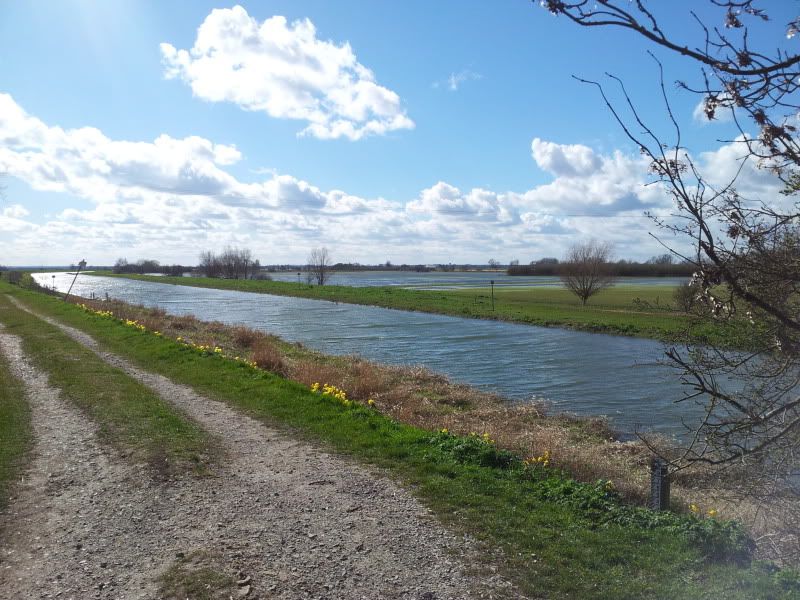
But we set the satnav for a bridge leading to a causeway between two dead straight rivers that look like a blue railway line on the map - the New Bedford River and the River Delph - just outside a small village a few miles to the west of Ely.
New Bedford River
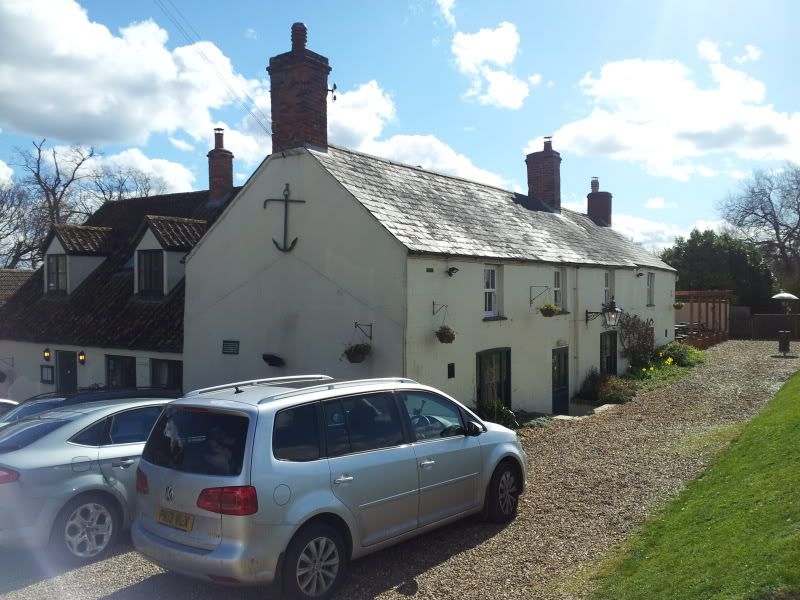
When we arrived, the rather random car park was already nearly full, which is usually a good sign.
The Anchor Inn - the bank on the right is the bank in the photograph above
The Inn dates backs to the seventeenth century, but when we went in, it seemed that the interior is much more 20th century. Although there was an inglenook, there was a table half in it, and the decor seemed more slightly tired 1960s dark wood than 17th century charm, though there are a series of different rooms, most now open at one end to the bar.
I'm waffling on a bit rather than getting round to the food, largely because I didn't have a great deal of food, still being fairly full after a large meal the night before and a hotel full English in the morning.
The menu is good and very much on message for a pub anywhere, but it was slightly disappointing that it could be anywhere, and there was nothing on the menu that particularly marked this out as a Fenland pub.
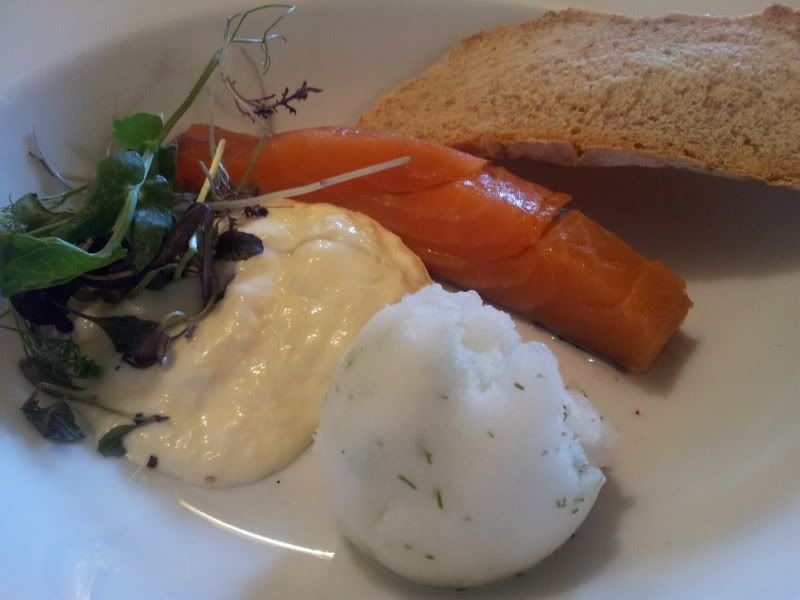
I started with a very pleasant salmon gravlax with celeriac pannacotta and a lemon & dill sorbet. The gravadlax seemed to be more just a good sweet cured salmon. I enjoyed both the celeriac pannacotta (which was just a little loose) and the lemon and dill sorbet, but wondered if the dish really needed both. Certainly if there'd been more of dill element to the salmon cure, there'd have been no need for the sorbet.
Gravlax with celeriac pannacotta and lemon & dill sorbet, toasted rye bread
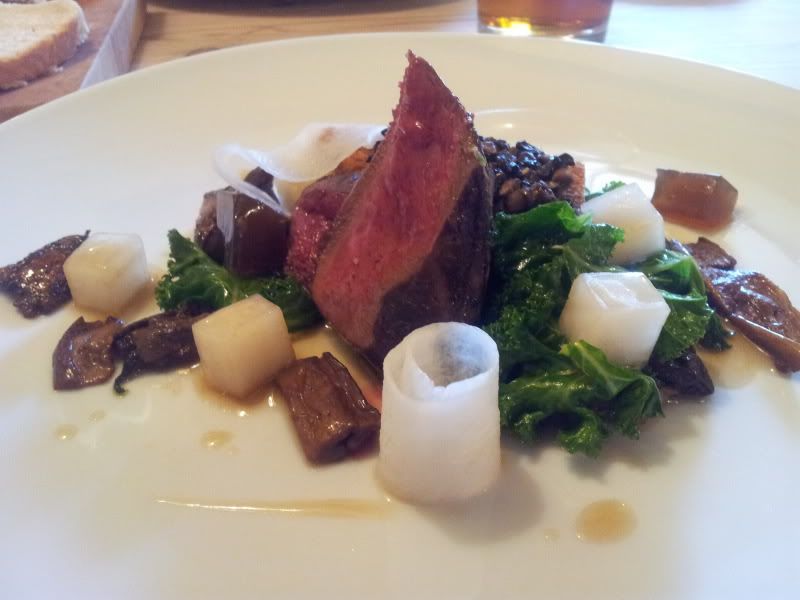
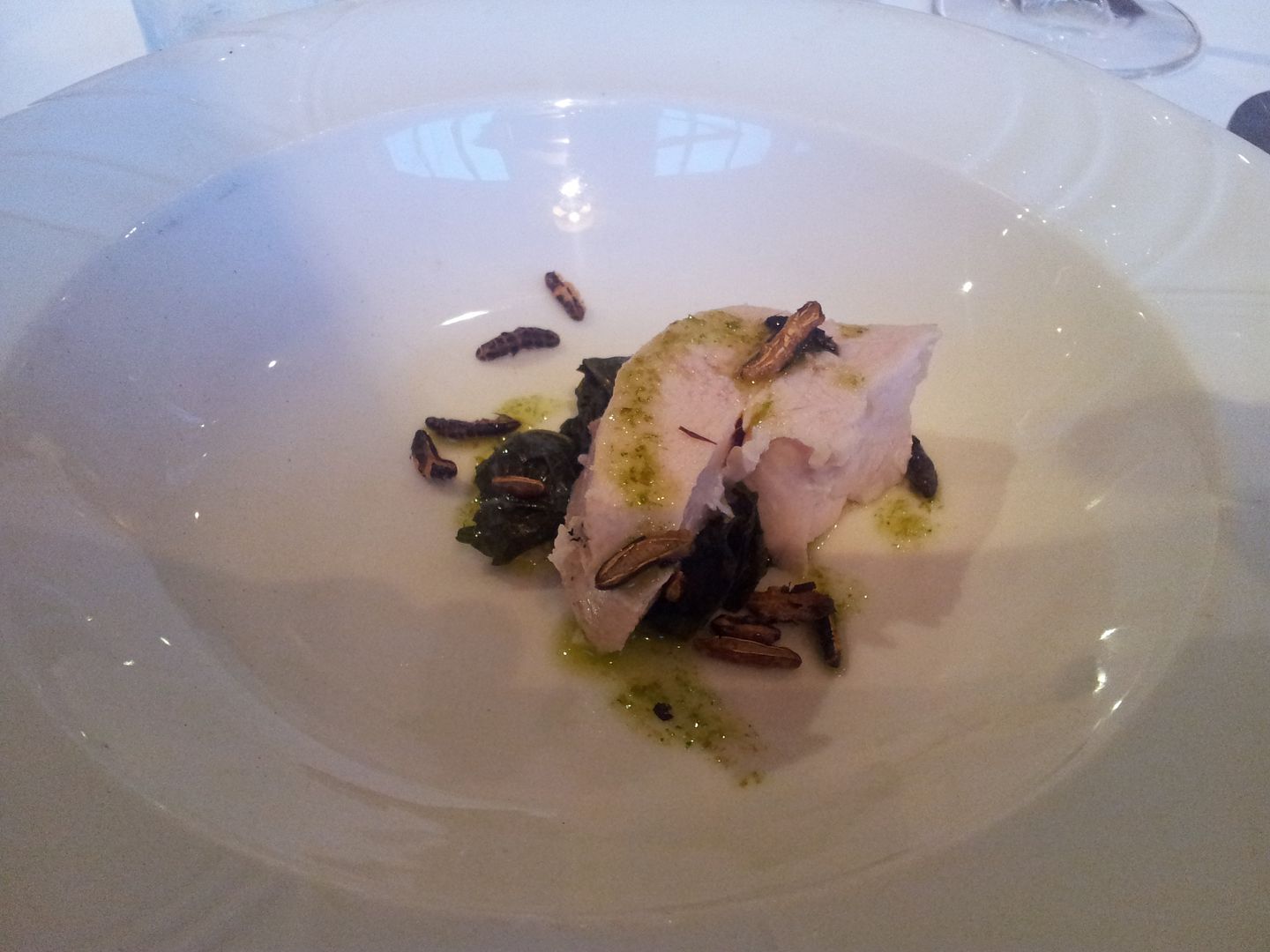
Instead of a main course, I just had another starter: pigeon breast with mushrooms, kale & mooli. Just what I wanted. A good dish, with all the ingredients done well, including the increasingly ubiquitous kale. The pigeon breast had been nicely cooked, but remained tough in places. But that's always the risk with any meat, especially wild game, as every animal is different.
Seared pigeon breast with mushroom duxelle, wilted kale, mooli and brioche
I have to hold my hands up and make it absolutely clear that this wasn't really a representative meal, but just a couple of starters. But I thought the food was good, and the service was good, and would have no qualms about going back again, preferably for a full meal, next time I'm in the area.
August the 12th is the Glorious Twelfth. It marks the first day on which grouse can be shot in the UK (unless the 12th is a Sunday, in which case the season starts on the Monday). The Glorious Twelfth is important in the game calendar as grouse are the first of the game birds to come into season, and so it marks the start of the shooting season for feathered game (partridge follow on 1st September and pheasant and woodcock on 1st October).
There had been reports that the 2013 season for grouse was going to be a good one and I had been following carefully the tweets of Stosie Madi, chef-patron of the Parkers Arms at Newton in Bowland as she prepared a menu highlighting local grouse, and then driving over to collect the birds from the gamekeeper of a prestigious local estate, and then finally preparing the birds, including some strangely beautiful photographs of the birds' stomach contents. No, really, just look:
The Gamekeeper's menu is a 5-course set menu made up of canapés, game and onion soup, a whole roast grouse with all the trimmings, dessert and petits fours. All this costs just £30, which I wouldn't be at all surprised to pay elsewhere just for the grouse.
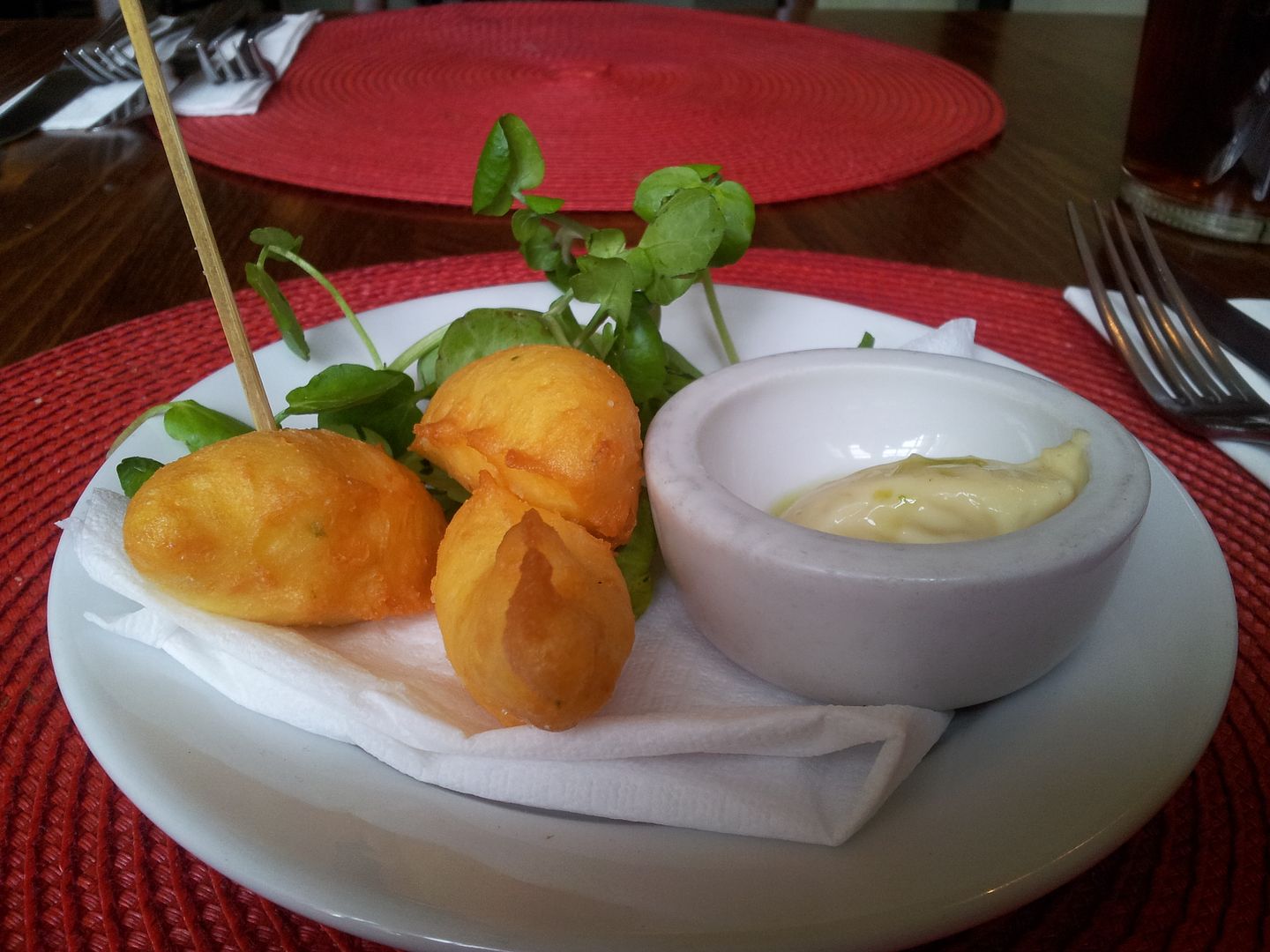
My canapés were some lovely, light, puffy potato fritters with an amazingly good homemade mayonnaise with (I think) a light hint of garlic.
Canapés: potato fritters
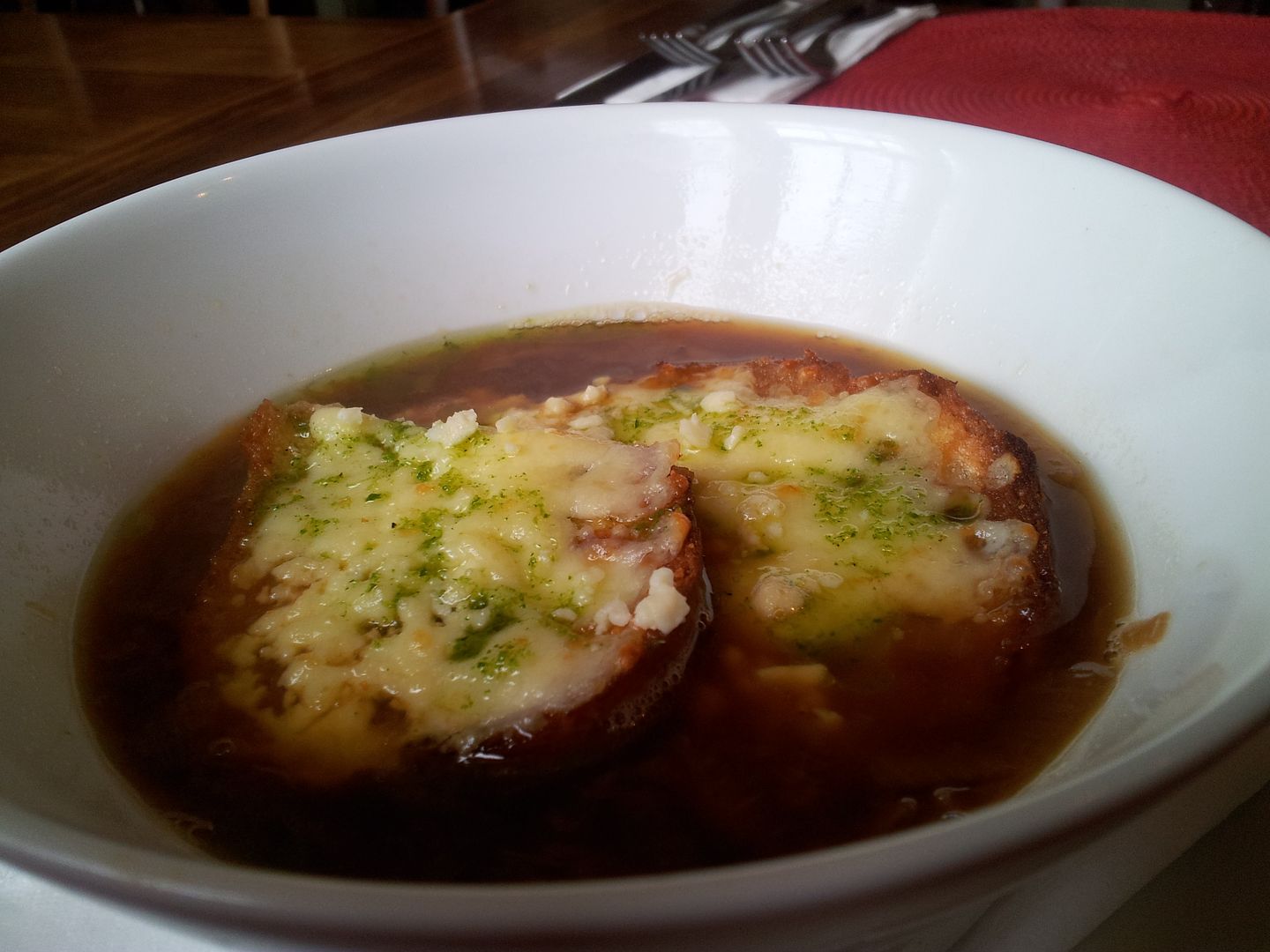
The first course was an onion soup. Not really a French onion soup, and not really an English onion soup, but, as it was made with a rich venison stock, definitely on-message for a Gamekeeper's Menu. As it was a hot summery day, I was worried about a French onion soup being a bit heavy and a bit too cockle-warming. It wasn't.
Local estate-shot venison and English onion soup with Dewlay Lancashire cheese toastie
I'm really not at all sure how what should be the heartiest of French bistro dishes could have been made such a light starter!
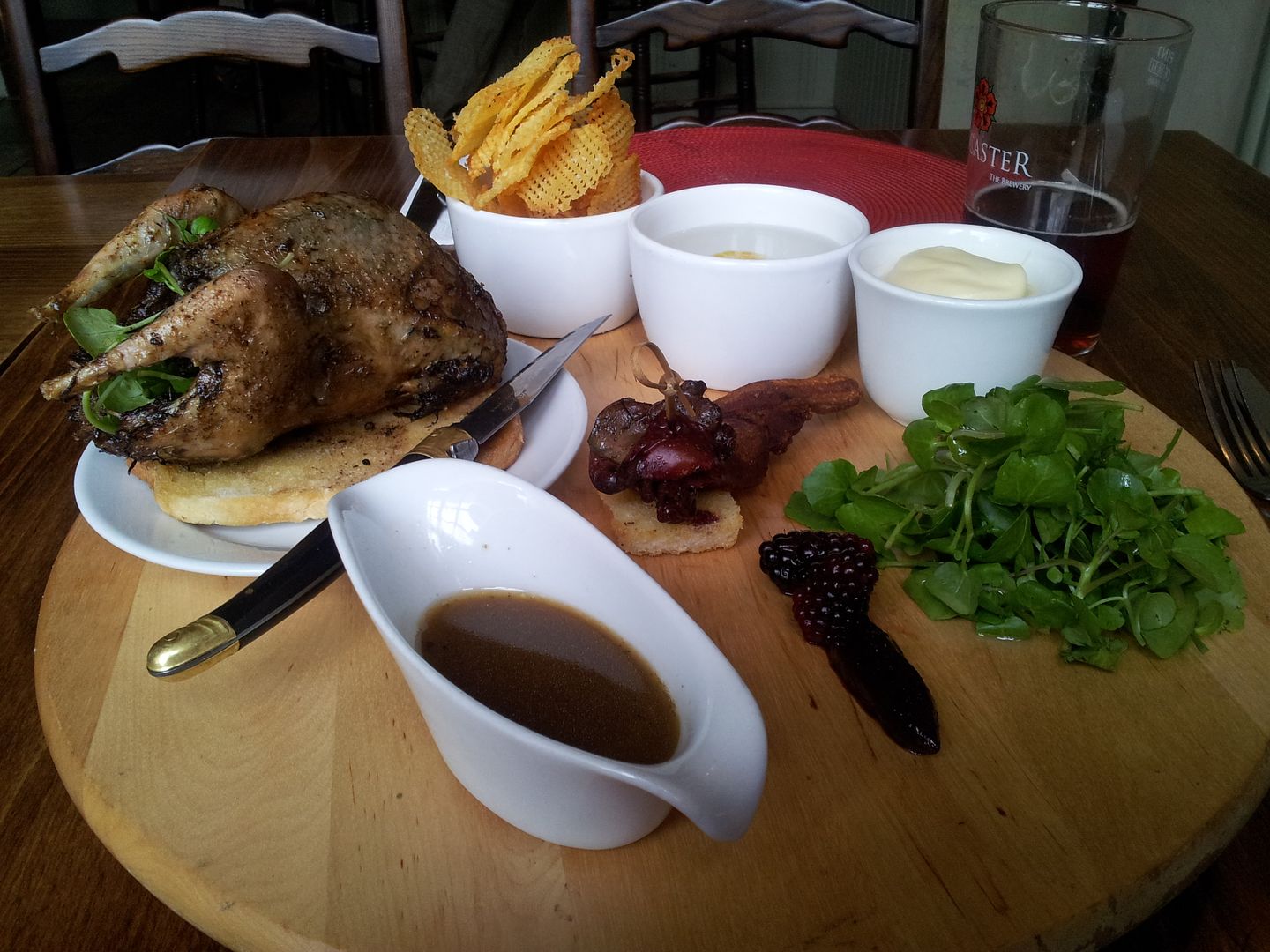
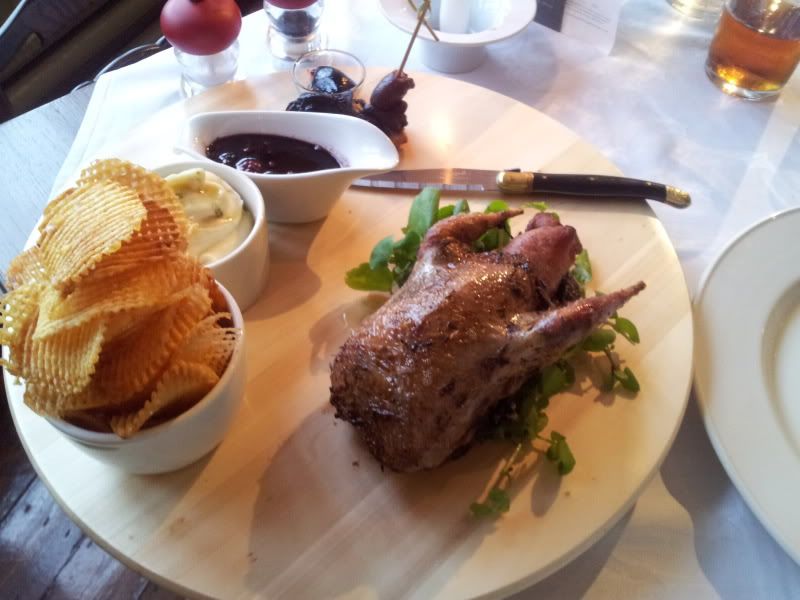
As good as everything else was, the highlight was always going to be the grouse. A whole roast grouse comes on a lazy susan, accompanied by (going clockwise in the picture below) some ever-so delicate game chips, a finger bowl (you are going to get stuck into the bird with your fingers...), a superb celeriac purée, a big bunch of peppery watercress, pickled blackberries and a blackberry-damson cheese, terrific gravy and a little croute topped with the bird's heart and liver (and a rasher of bacon that really didn't need to be there.
Grouse and all the trimmings
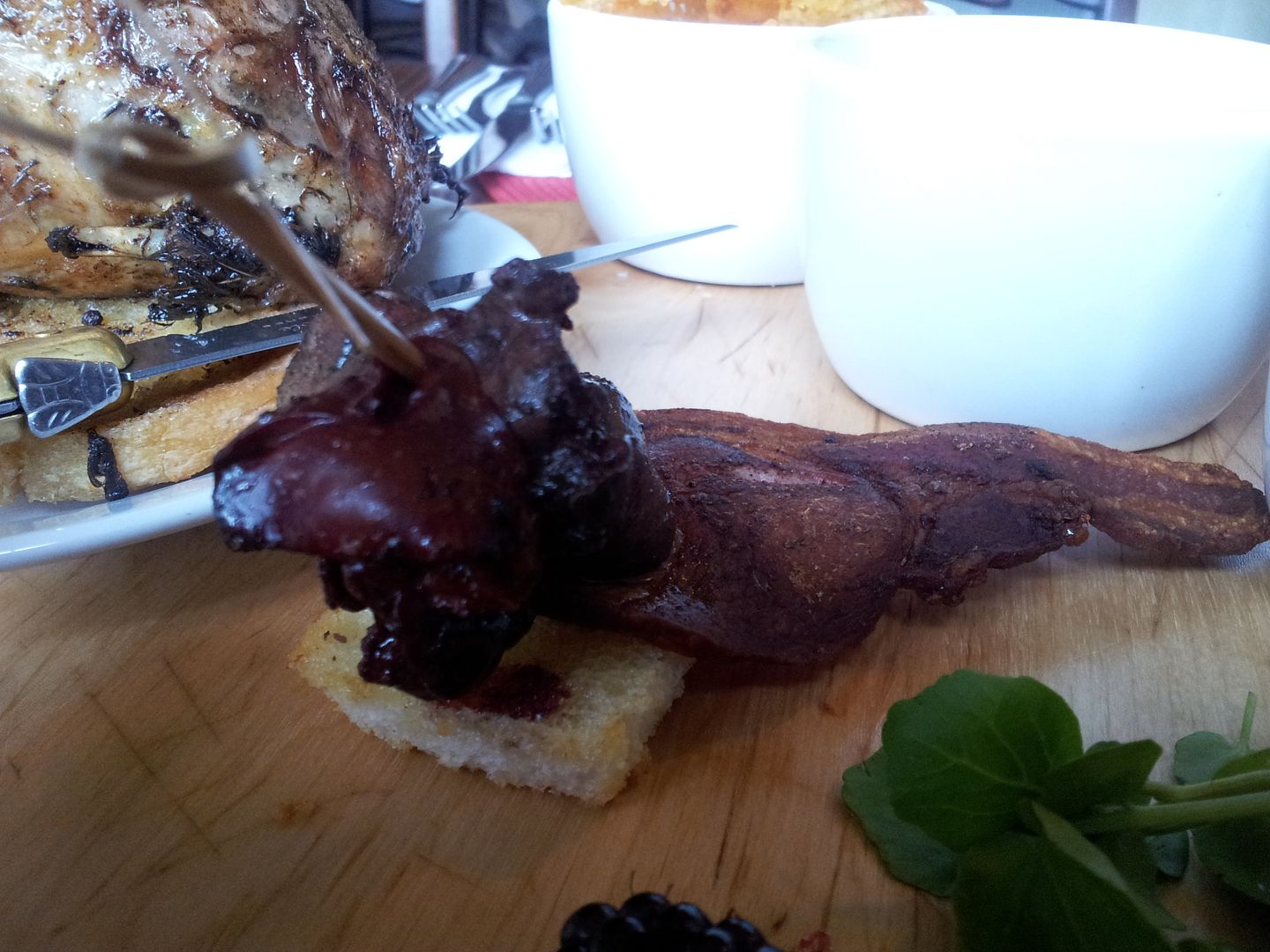
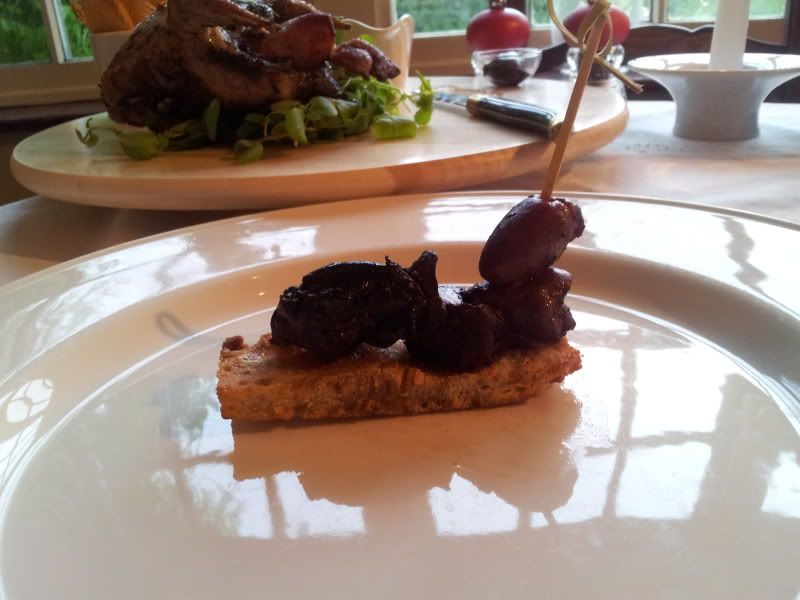
Grouse liver & heart on crispy bacon and a croute.
(Apologies for quality of photo: the camera was fooled by the white pots)
Some traditionalists might bemoan the absence of bread sauce, but really I didn't miss it. Maybe it could be useful with older birds as the season progresses? But this was only the 14th August, with young birds, not hung at all.
The grouse had been roasted with some butter under the skin, butter flavoured with heather and herbs foraged on the self same moors on which the grouse had lived. The grouse had (of course) been perfectly cooked, was tender and had a great flavour: there was none of the bitterness to the legs that is often found (and why the legs are often left uneaten, or slow cooked separately). It really was worth digging around the carcase to extract the last bits of delicious flesh.
After a little rest (and further hand washing, as there's only so much grouse juices you can remove in a smallish finger bowl), it was time for the custard tart made with local eggs from Slaidburn.
Slaidburn egg custard tart
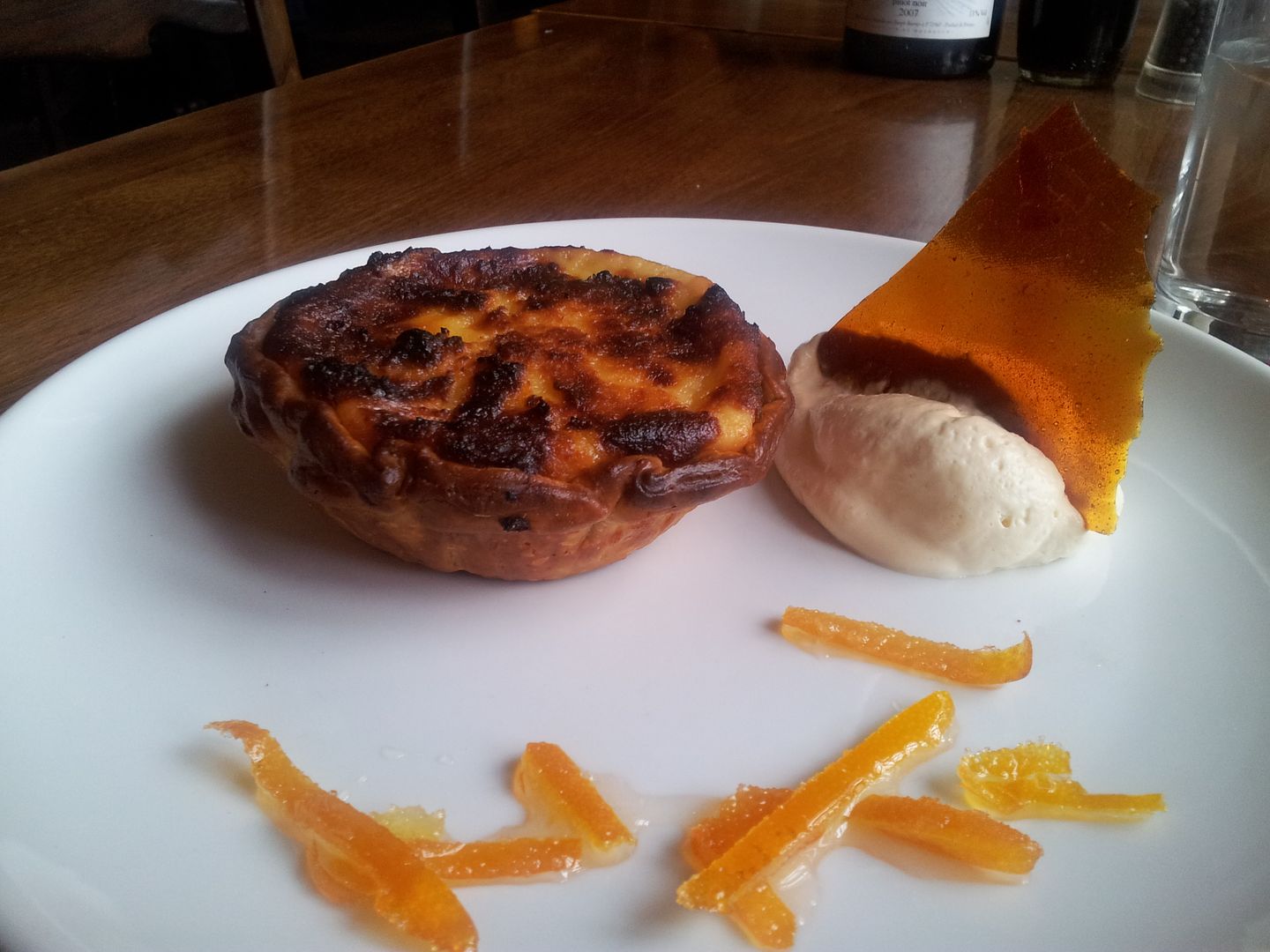
Custard tart at the Parkers Arms usually takes the form of the Portuguese pasteis de nata. Lovely softly set creamy custard. On the side is a quenelle of crème Chantilly with an elderflower confit/marmalade.
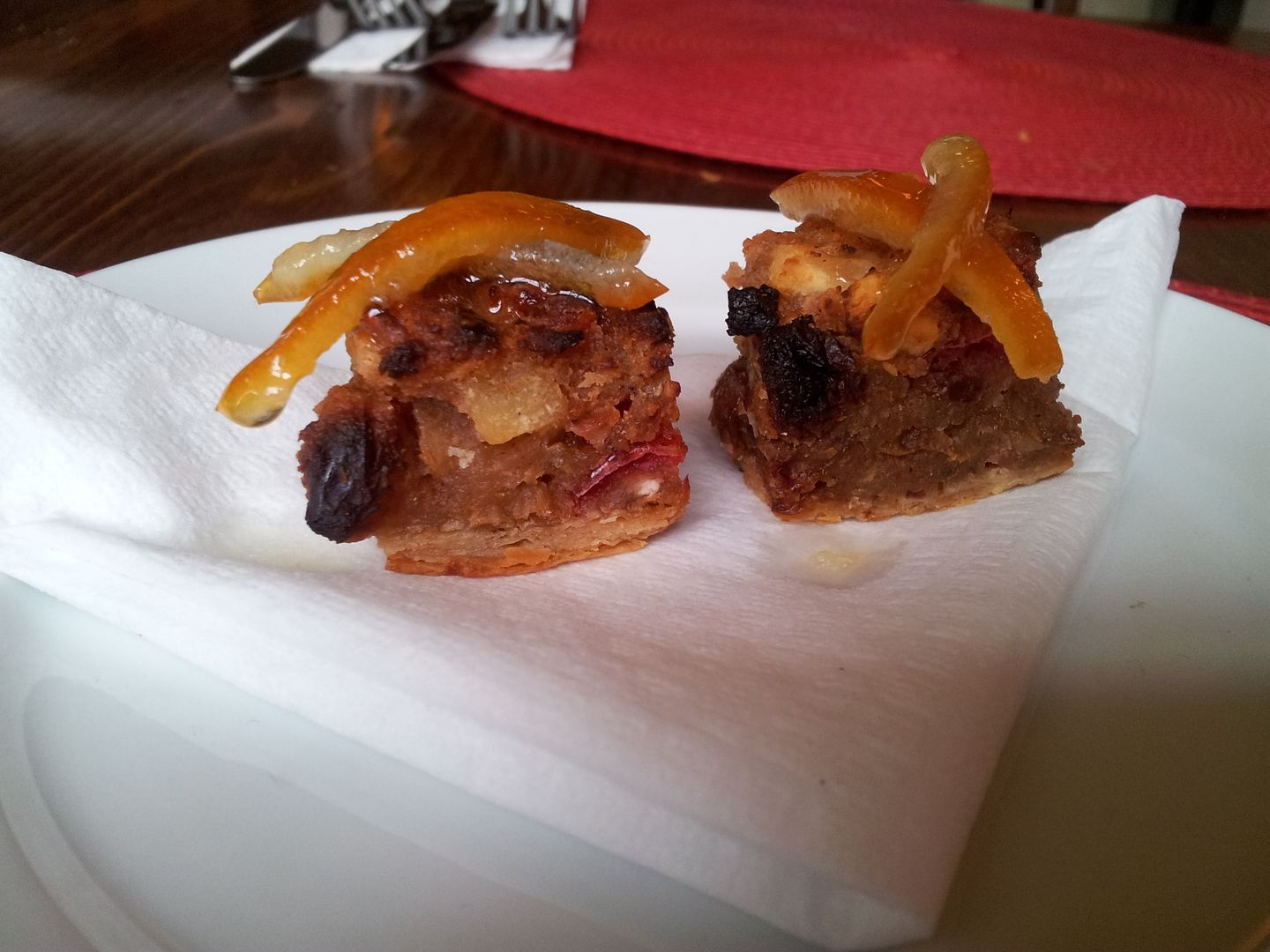
Finally, there were some little petits fours, in this case a couple of small cubes of the Parkers Arms signature dessert, Wet Nelly (a sort of cross between treacle tart and mince pie, with a wider variety of fruit).
Wet Nelly petits fours
The Wet Nelly is always jolly good, but I thought that these showed that it works better as a slice of tart, rather a small cube.
I remember thinking that if this was a Gamekeeper's Menu, there must be a lot of extremely well fed gamekeepers out there; and equally that there are probably a lot of gamekeepers who'd like to have eaten as well as I just had.
I probably go to the Parkers Arms in the tiny Ribble Valley village of Newton-in-Bowland more than I go to any other local pub or restaurant. The beer's good, the welcome and service are good (though occasionally struggle when under pressure on the busiest days). But above all, the food is genuinely and consistently interesting and excellent.
I could fill this blog with reports of meals at the Parkers Arms (follow me on Twitter for blow by blow details in the future), but I thought for once, I'd just present a photograph gallery of images from recent meals in 2013. Everything at the Parkers Arms is homemade (the only exception I can think of is the bacon and gammon which come from the excellent Roaming Roosters near Burnley), so rather than me repeating that in the caption to each photograph, please assume it.
I hope you enjoy looking at them as much as I enjoyed eating the dishes!
Starters
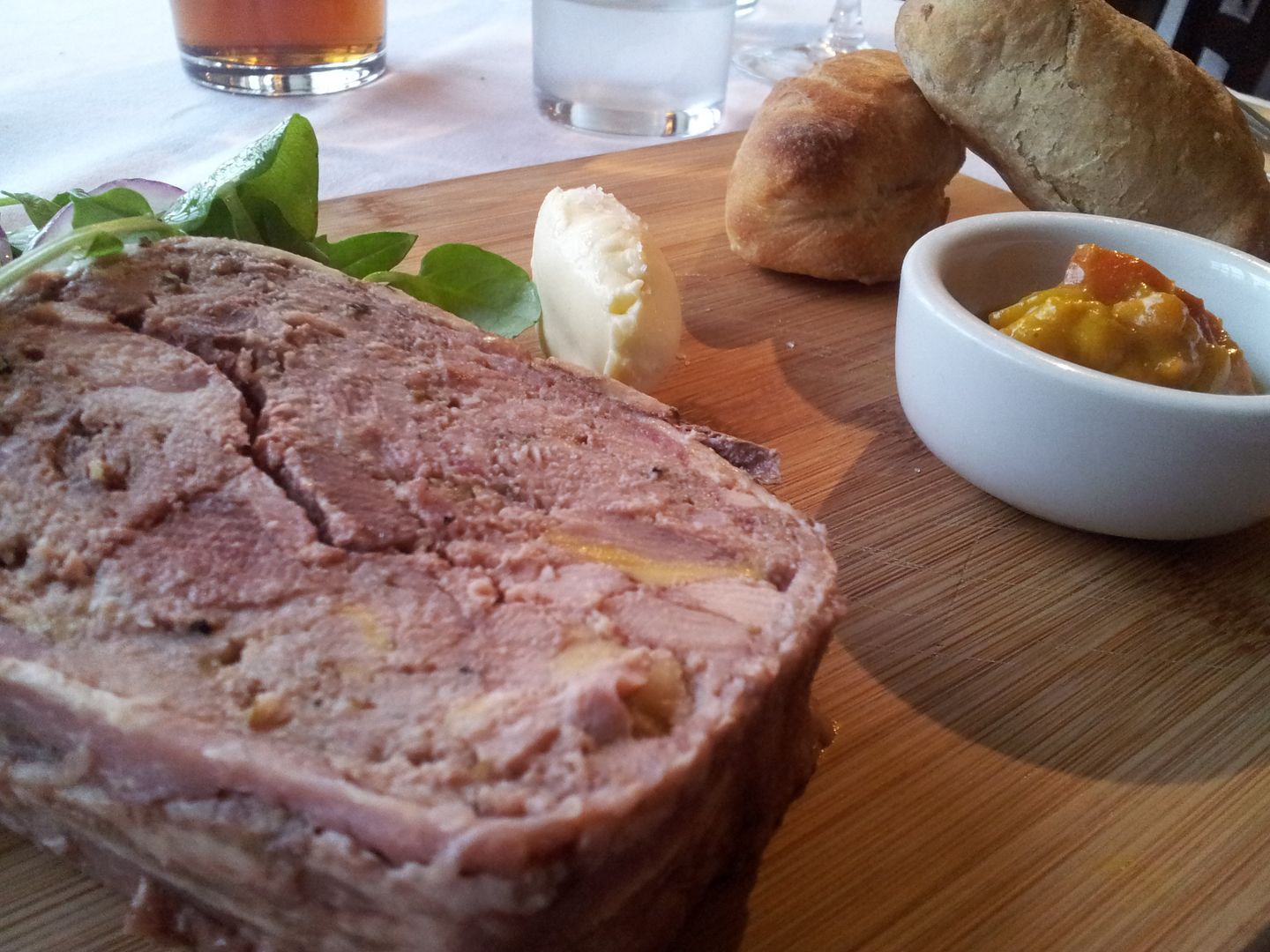
Game terrine with piccallili
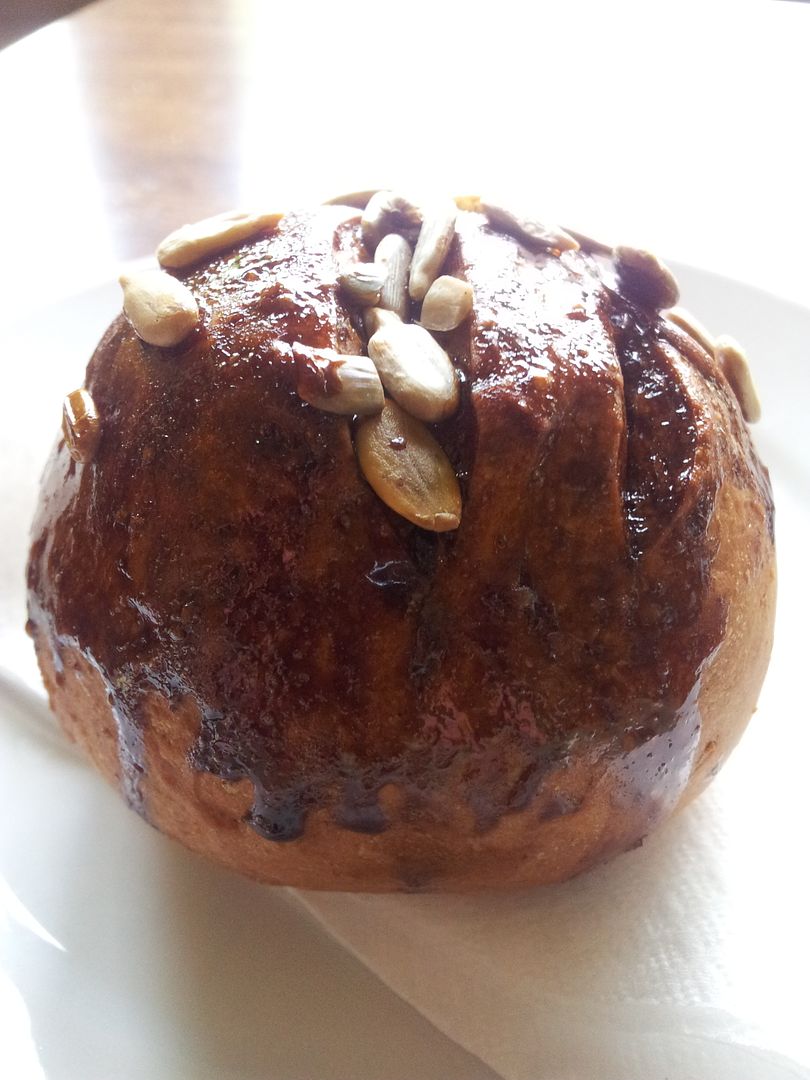
Pastrami with treacle bread
Stosie has now got her pastrami spot on, and as for that bread ... well that's almost worth the trip on its own.
The treacle bread
Cheese scone with tomatoes
On this occasion, I'd asked for a small tasting menu, and this cheese scone was the first course out: not something I'd have ordered, but it was jolly good - a very light scone with a nice cheesy flavour
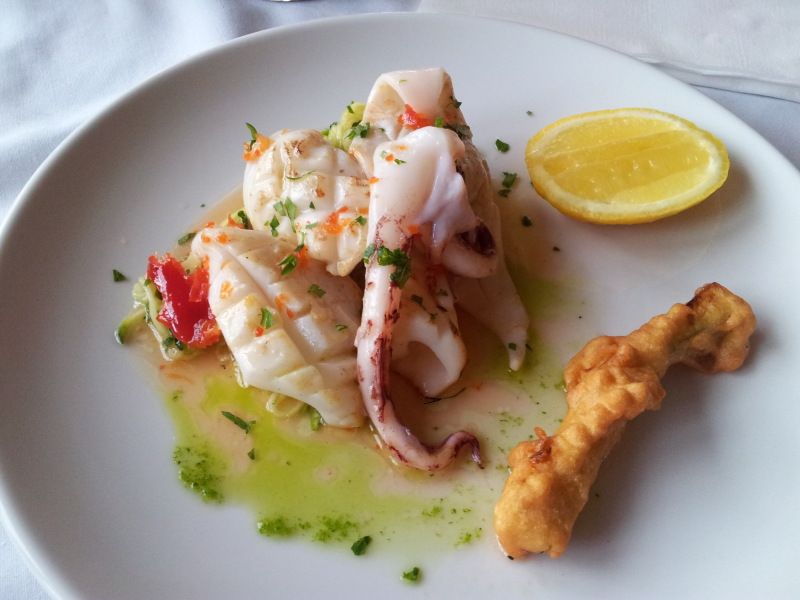
Beautiful buttery squid
Mushroom parfait
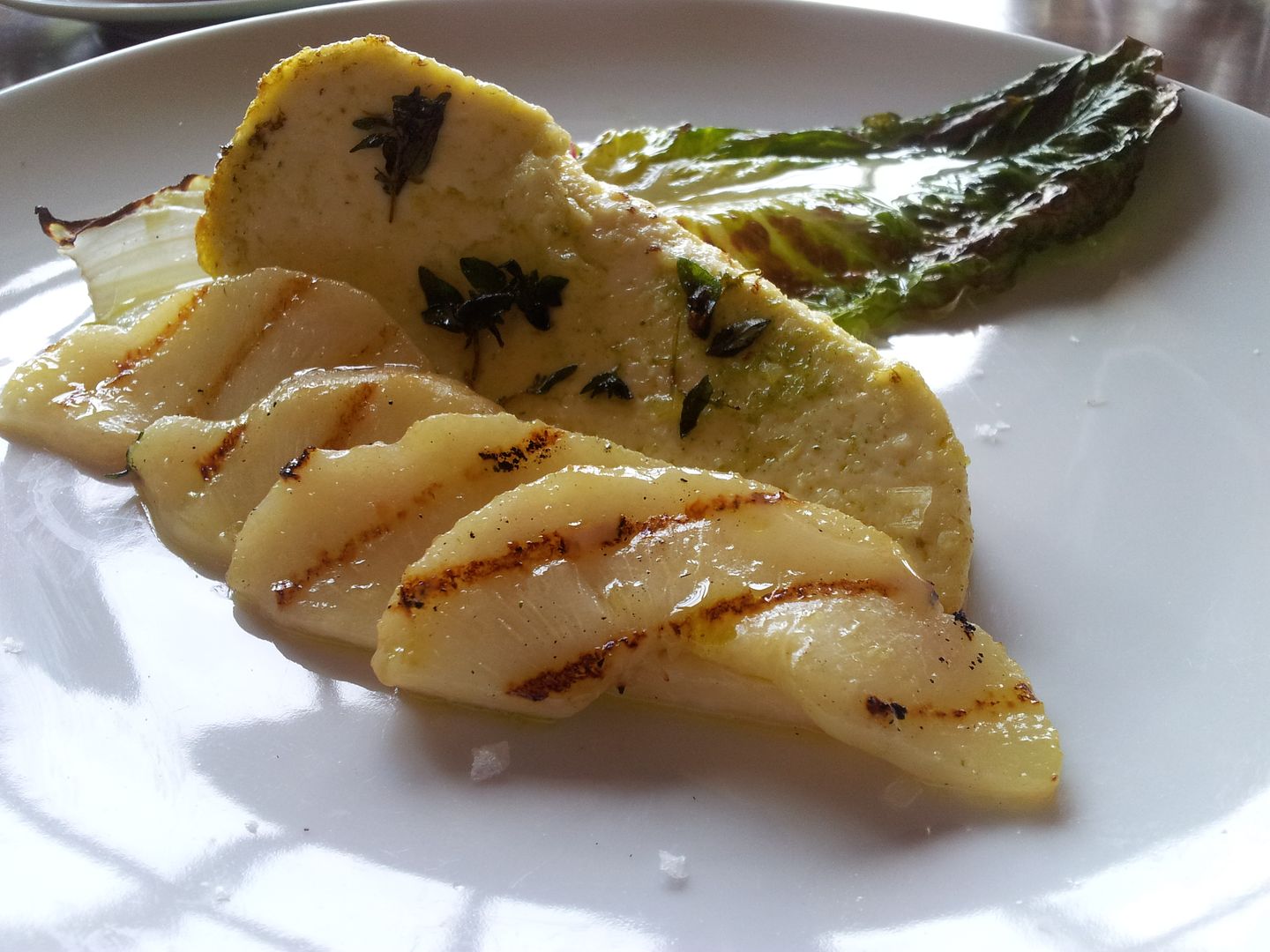
Curd cheese with grilled white peaches
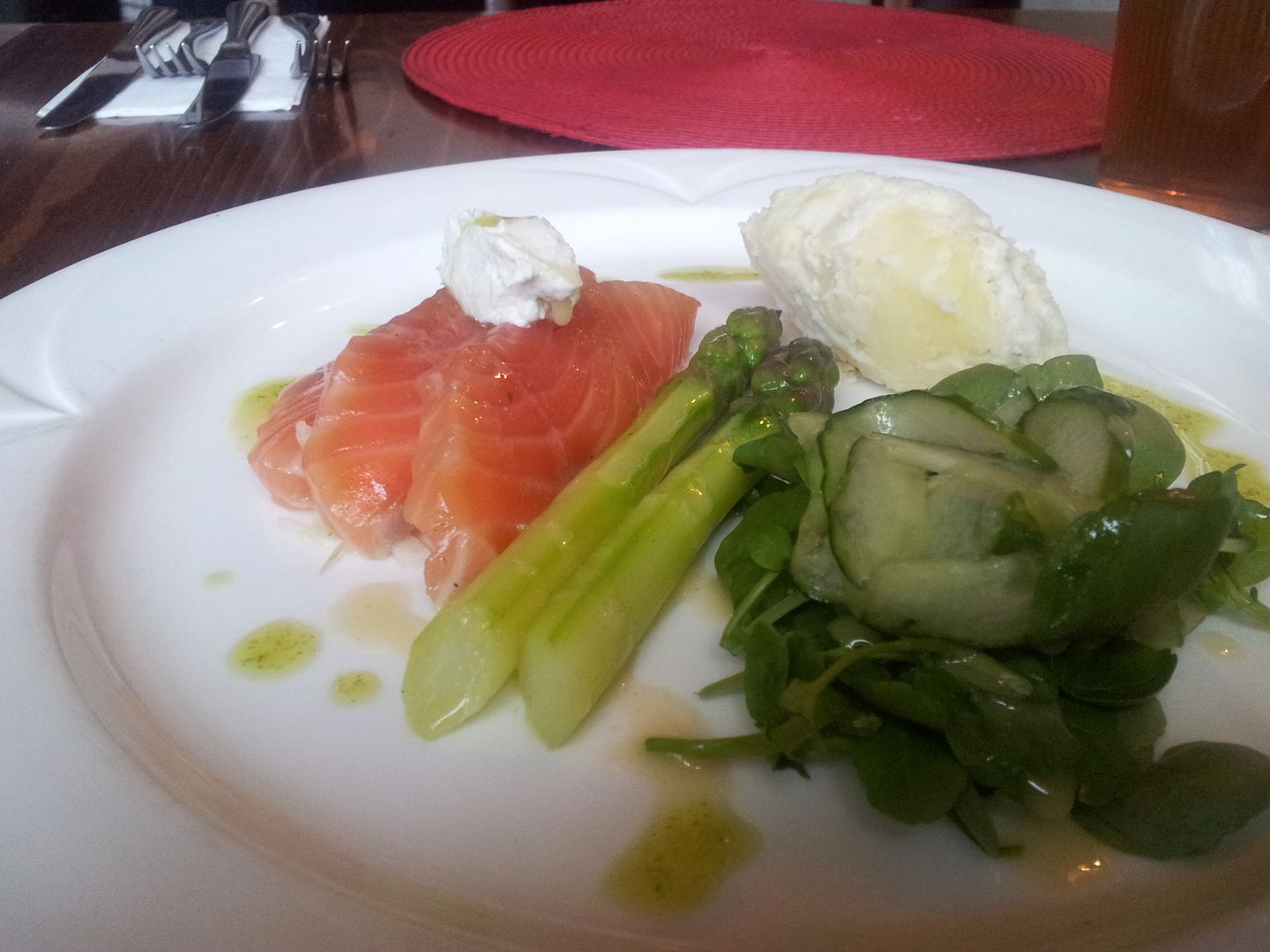
Cured salmon with horseradish cream
Wild garlic custard with chicken scratchings
Main courses
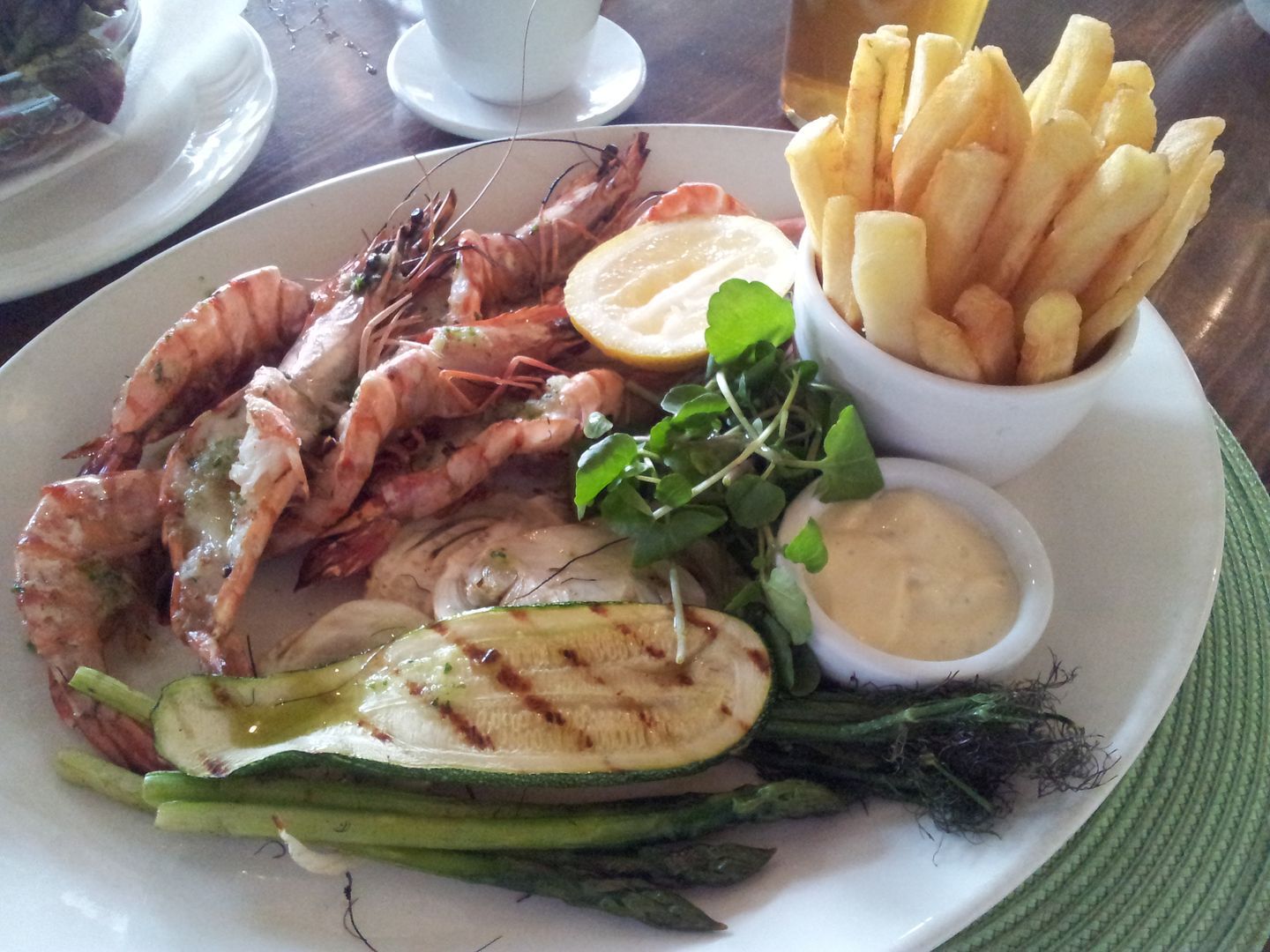
Prawns and vegetables grilled on Stosie's new toy, a Primo BBQ.
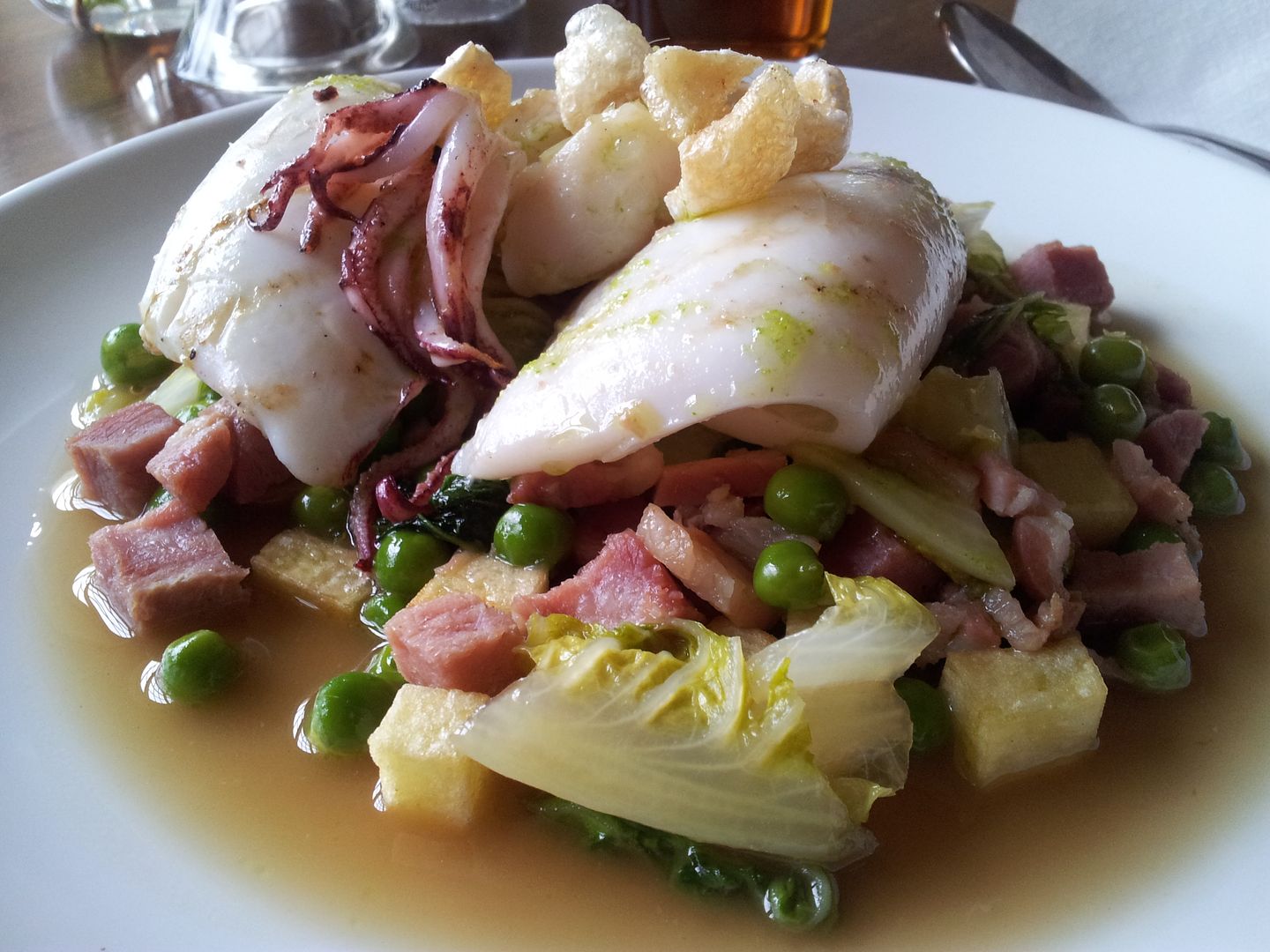
Squid with extra hammy petits pois à la française
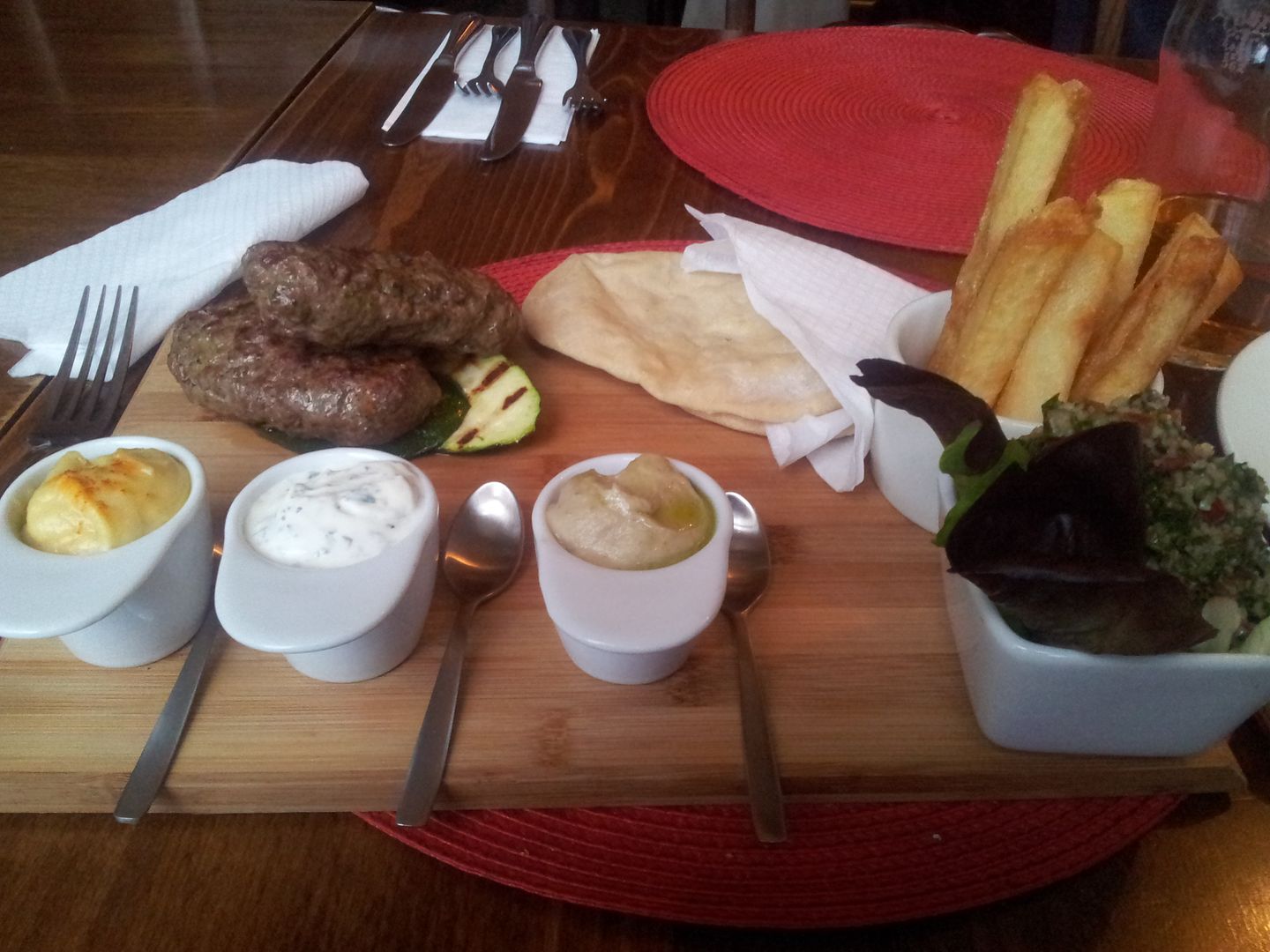
Lamb kofte - beautifully and delicately spiced, excellent hummus, tzatziki and baba ghanoush in the little pots
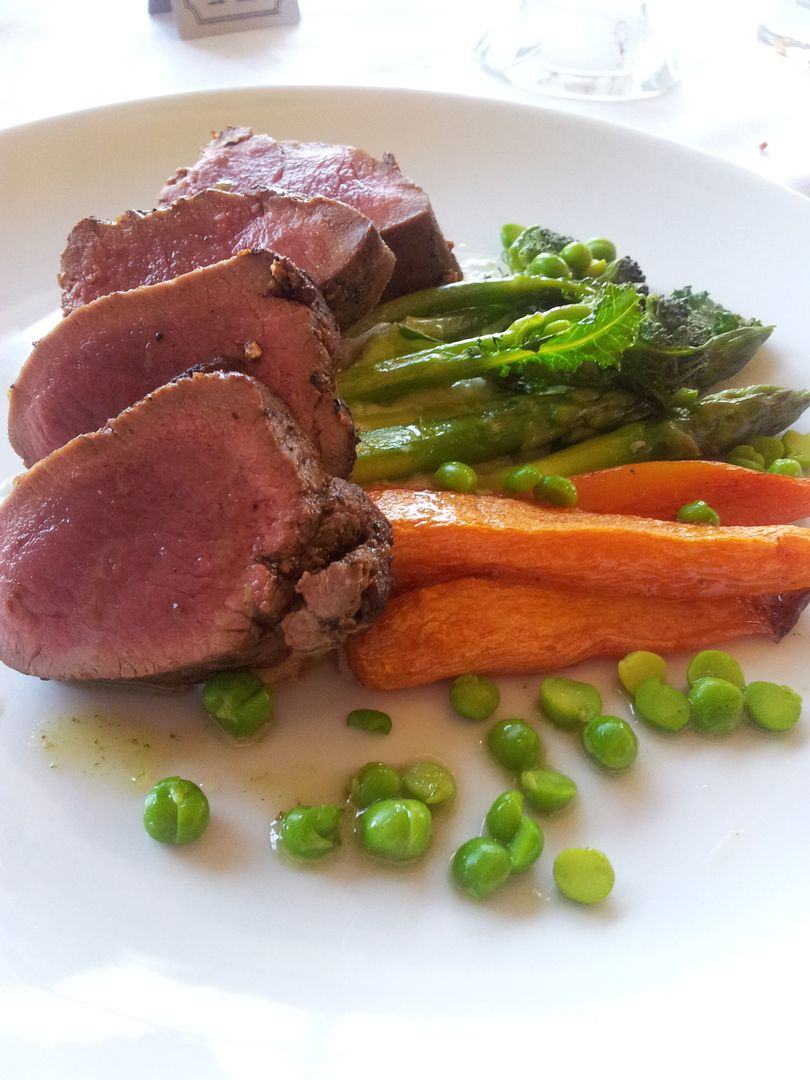
Beautiful, simple spring lamb
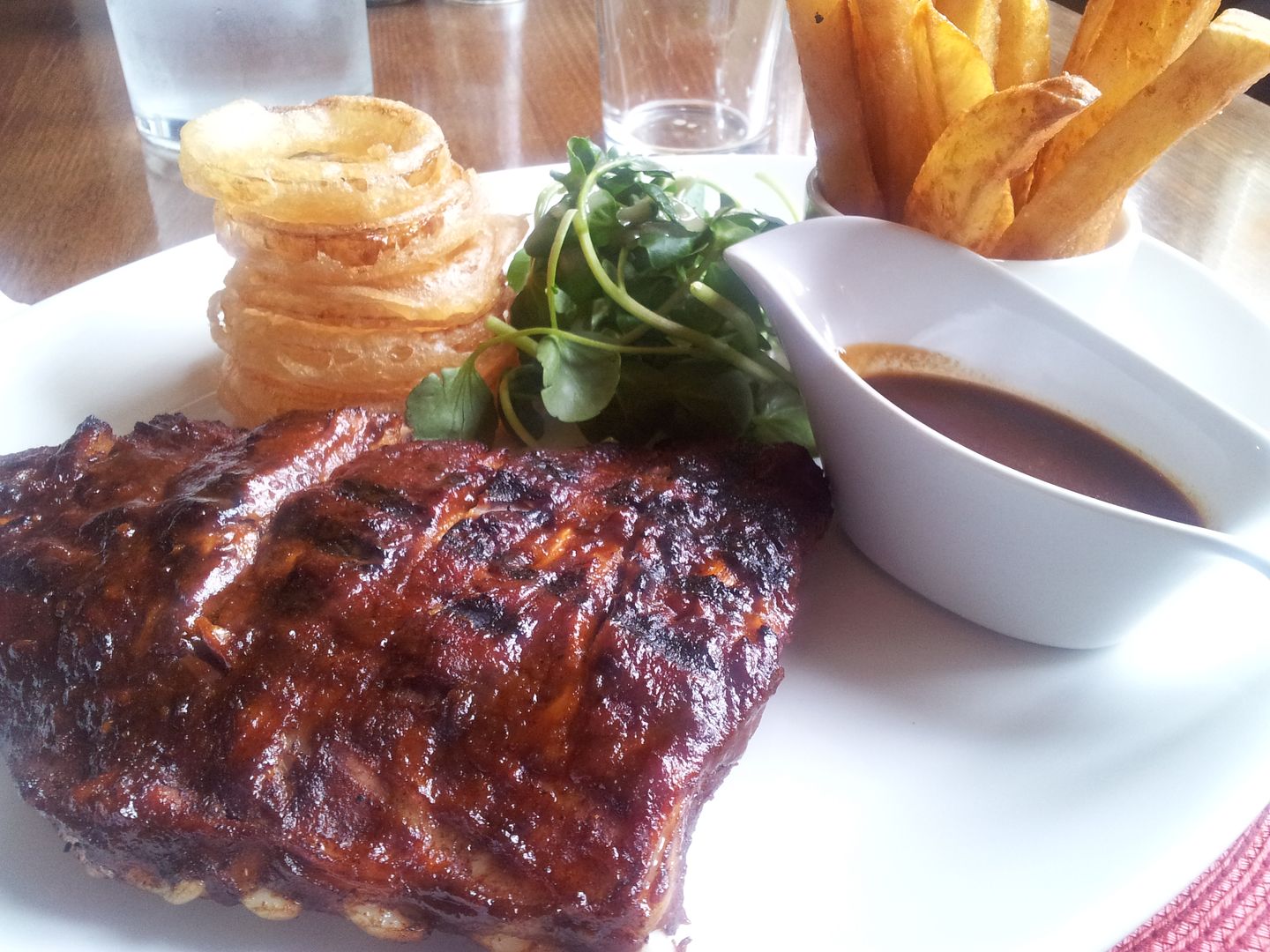
Spicy BBQ baby back ribs. Fab French fried onions too.
Grouse done properly
The grouse liver, kidney and heart
Desserts
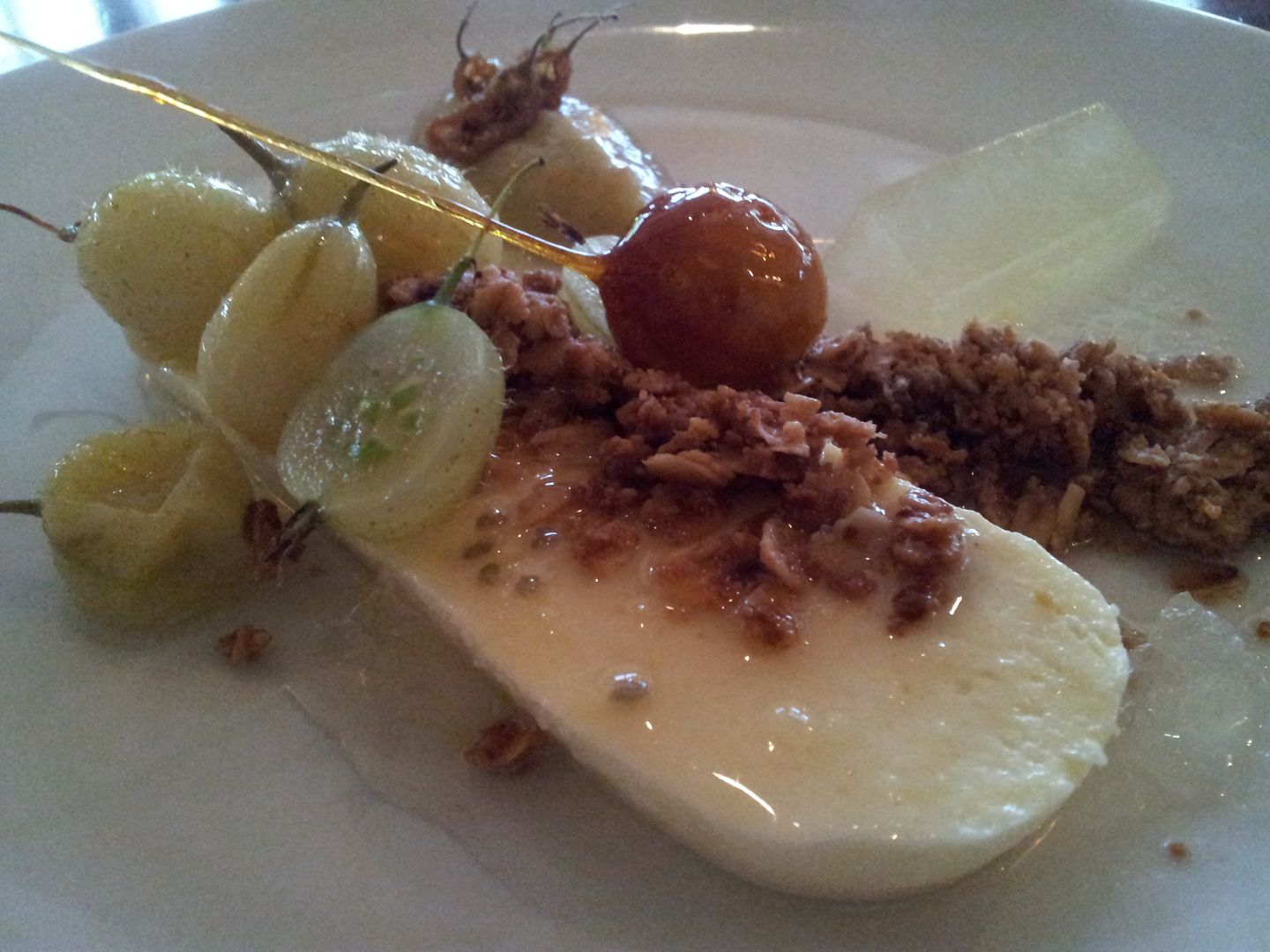
Stosie's curd cheese with a variety of gooseberry preparations
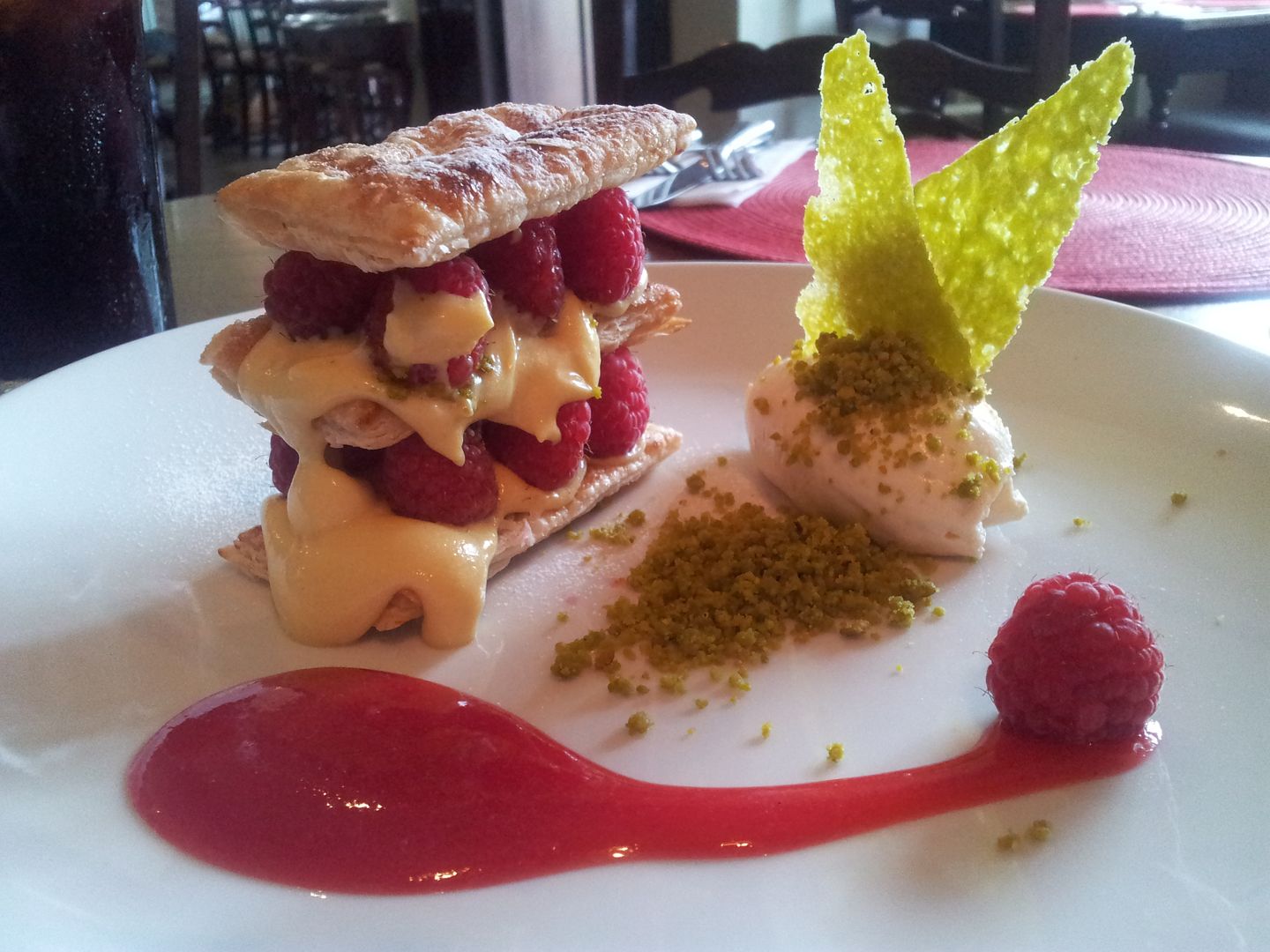
Raspberry-vanilla slice
The pasteis de nata (Portuguese custard tarts) are a must if they're on the menu
Chateau Musar wine tasting night 11th May 2013 Parkers Arms Newton-in-Bowland
I've been a fan of Chateau Musar, the best known of the several wine producers in Lebanon, for many years now, and I've been a fan of the Parkers Arms almost since the current team headed by Stosie Madi in the kitchen took over a few years ago. Stosie has some Lebanese ancestry, and I've always kept an eye out for anything middle-eastern on the menu (the lamb kofte with home-made pitta breads, for example, are always a joy).
So it was a privilege, through the medium of Twitter, to introduce Stosie and Ralph Hochar of Chateau Musar UK, and let them get on with coming up with a plan.
This evening was the result of that planning. Stosie created what read like a traditional Lebanese menu, but was strongly influenced by the wonderful ingredients that Lancashire can offer, her own style of cooking and a pinch of understanding of what her customers would eat. The wines were chosen by Ralph Hochar and sourced through D Byrne & Co of Clitheroe.
For more background on Chateau Musar and some tasting notes on some remarkable old vintages, see my post here.
(I should add the disclaimer that as a result of the introduction of Stosie Madi and Ralph Hochar, and
the encouragement I gave to the development of this evening, I was given a discount for the evening. My comments are, however, not influenced by the not-at-all-a-freebie, and my attempts to find different superlatives all reflect the quality of the cooking.)
We started in the bar with copious quantities of Musar Jeune Rosé 2011 and platters of mezze circulating.
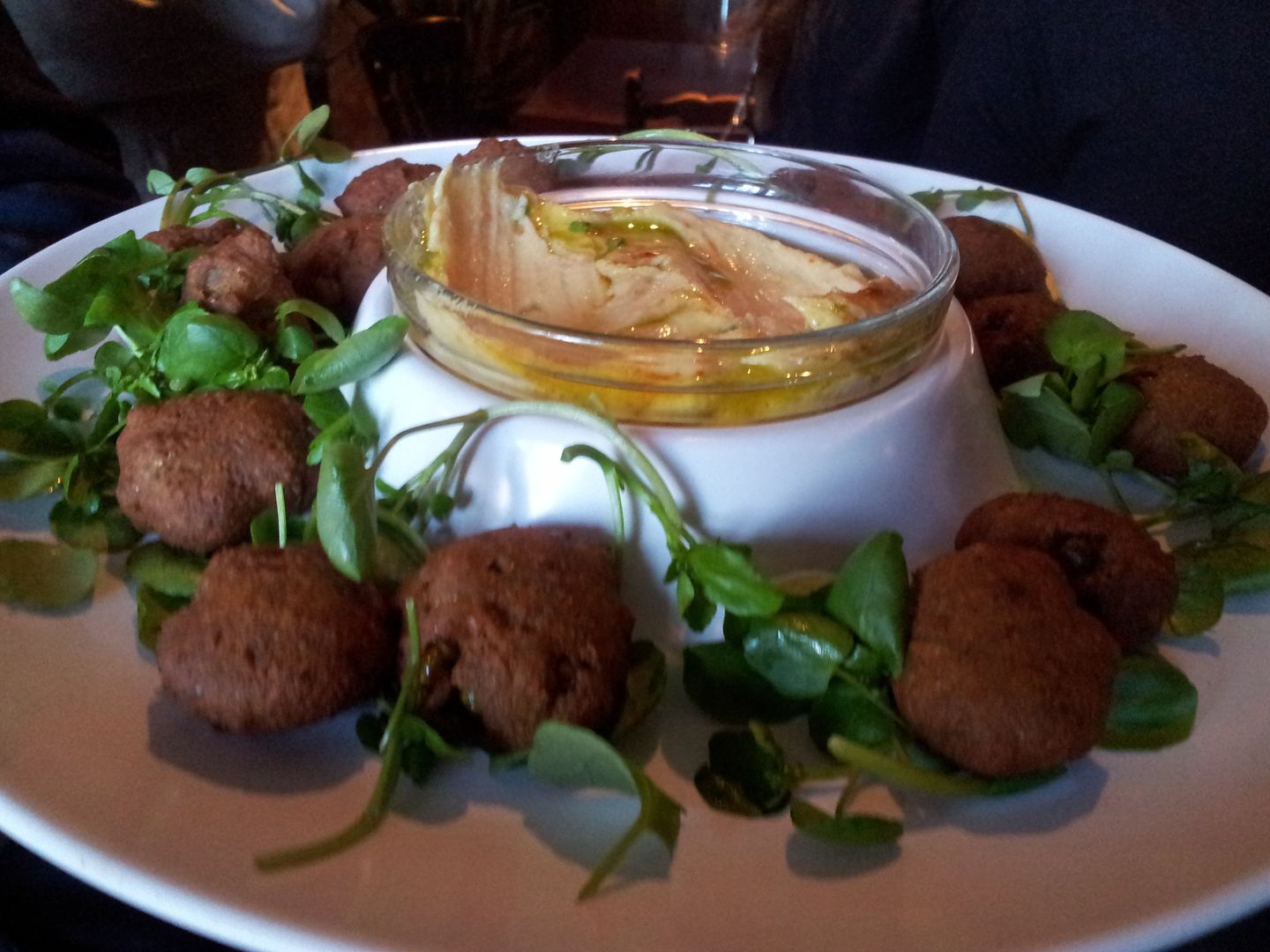
Unfortunately balancing glass and camera, together with half-eaten platters doesn't make for particularly appealing photographs. Falafels, made with garden peas as well as chickpeas, were light and tasty, and came with a lovely smooth hummus.
Falafels
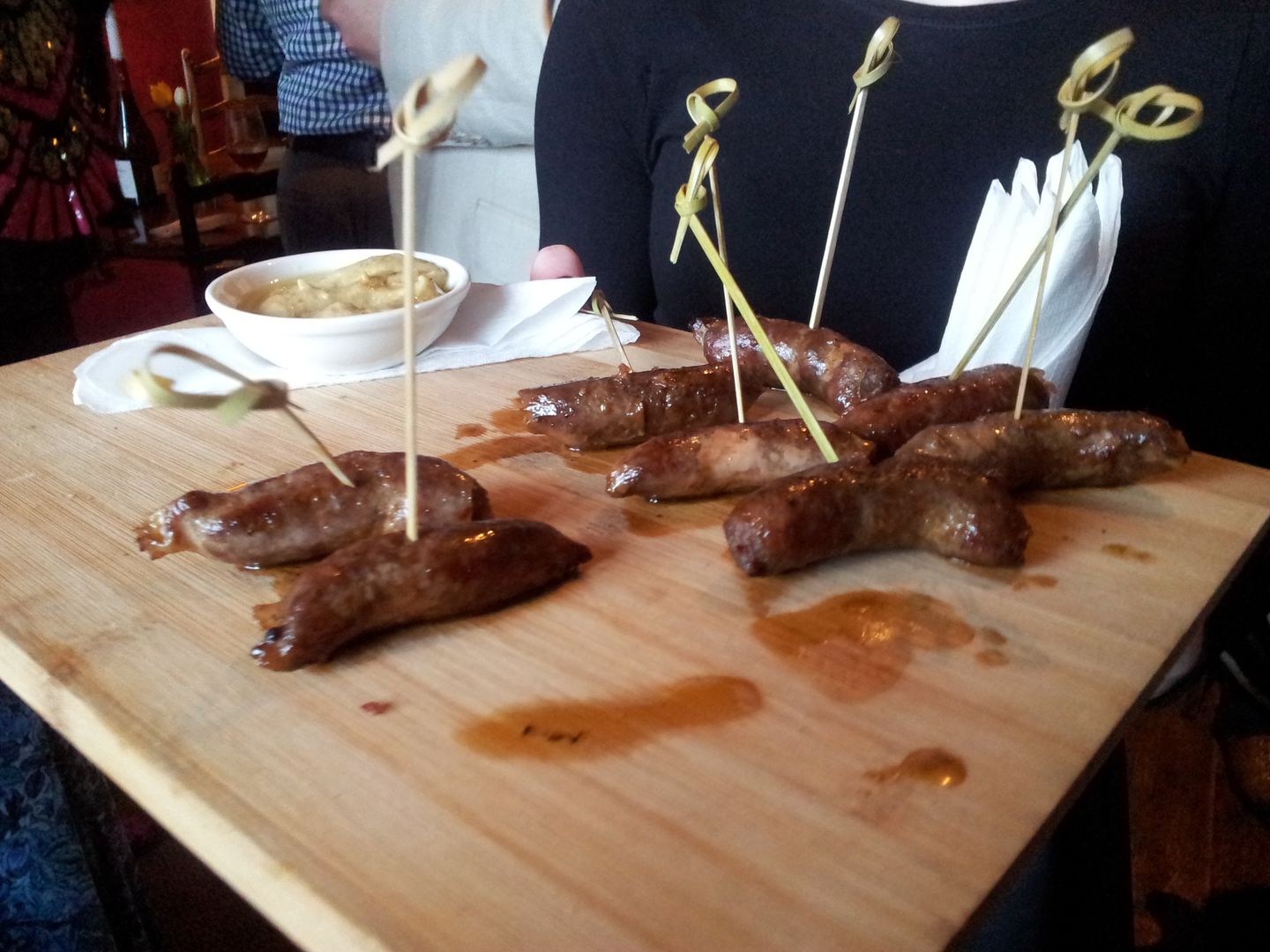
The Makanek sausages, made and smoked in-house from local lamb and beef, were particularly good, having been given a pomegranate molasses crust before being grilled over charcoal. These came with another dip: an excellent smoky baba ghanoush. I'd be delighted if these made a reappearance on the Parkers Arms menus.
Makanek sausages
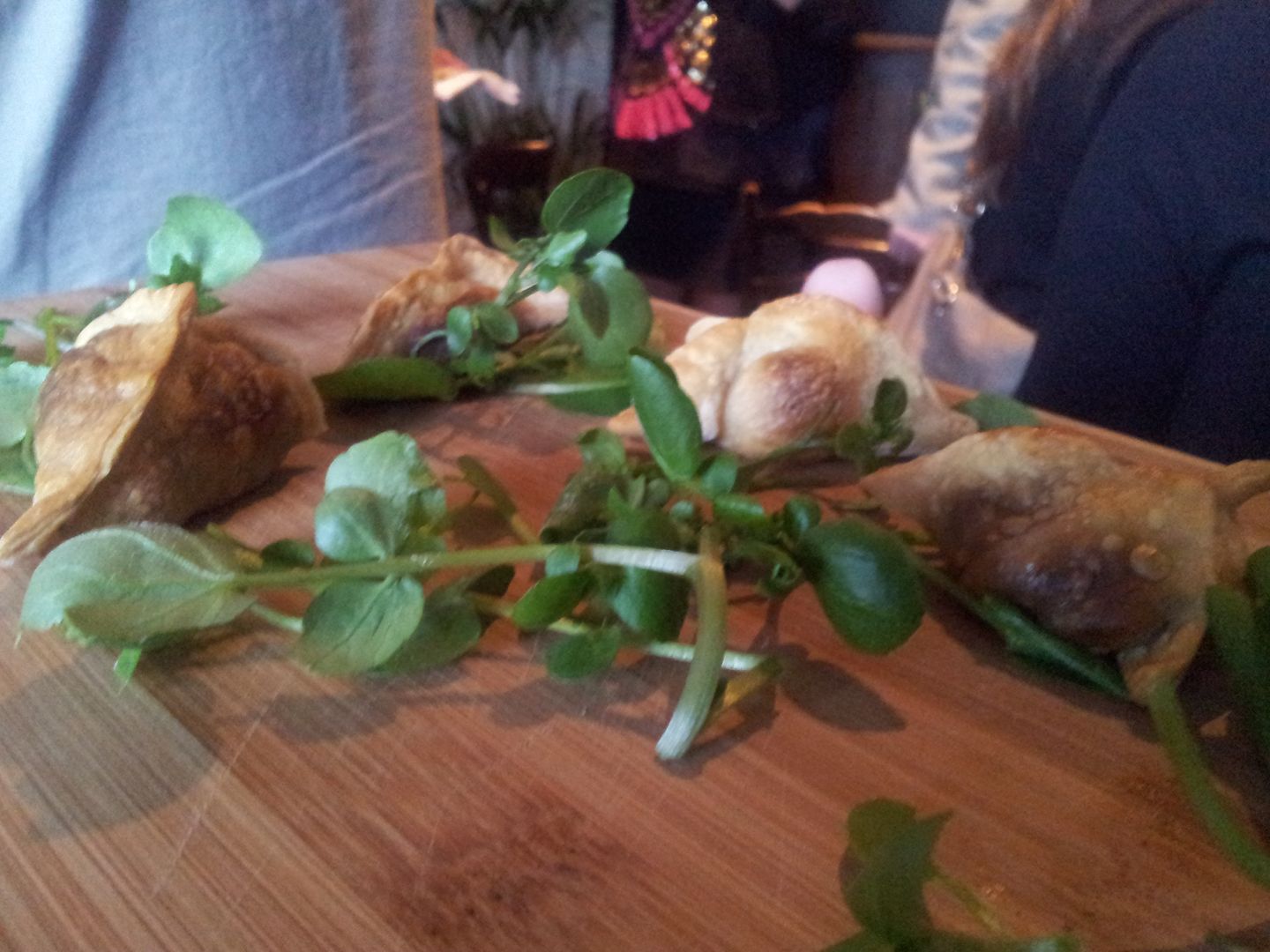
Fatayer were great little pasties with a sweetish and very moreish filling of wild garlic and caramelised onion.
Fatayer
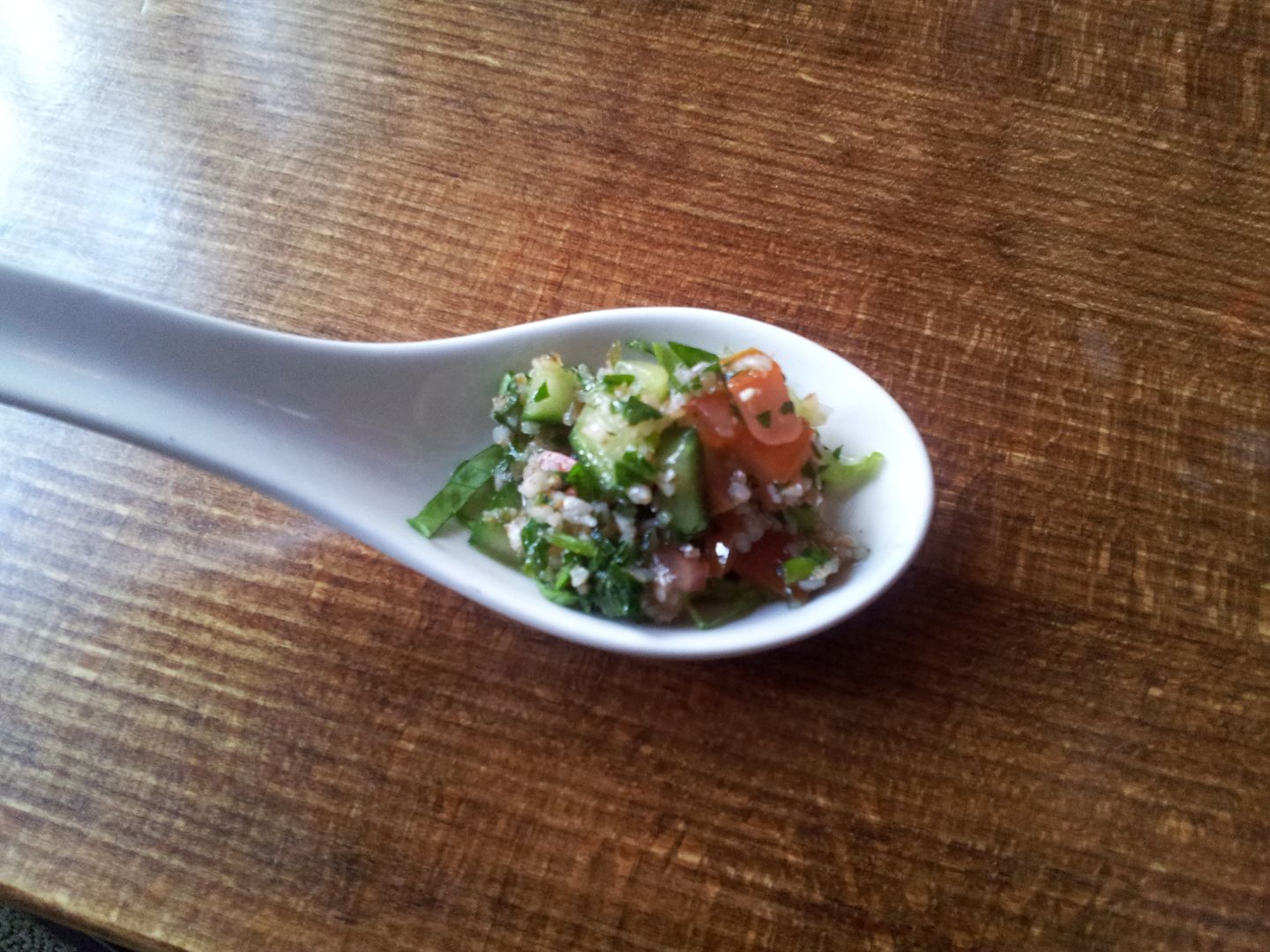
There was also some delicious, almost refreshing tabouleh (the ubiquitous bulgur wheat and herb salad of the Middle East, here with some chopped tomatoes too), and some toasted flat breads with a Lebanese version of what we perhaps more commonly know as tzatziki, here using Stosie's home-made yoghurt.
Tabouleh
Flatbreads and yoghurt dip
Chateau Musar, Musar Jeune Rosé, 2011
This has a bright attractive pink colour. There are strawberries & pomegranate on nose with a hint of minerality. Nice soft on the palate, this has gentle sweetish red fruit with a nice pleasant character. Very clean finish. This is a good rosé with a nice, interesting character. 88/100
After moving through to the dining room, there was more Khobez flatbread, now with a powerful za'atar herb oil for dipping, which was rapidly mopped up by our table.
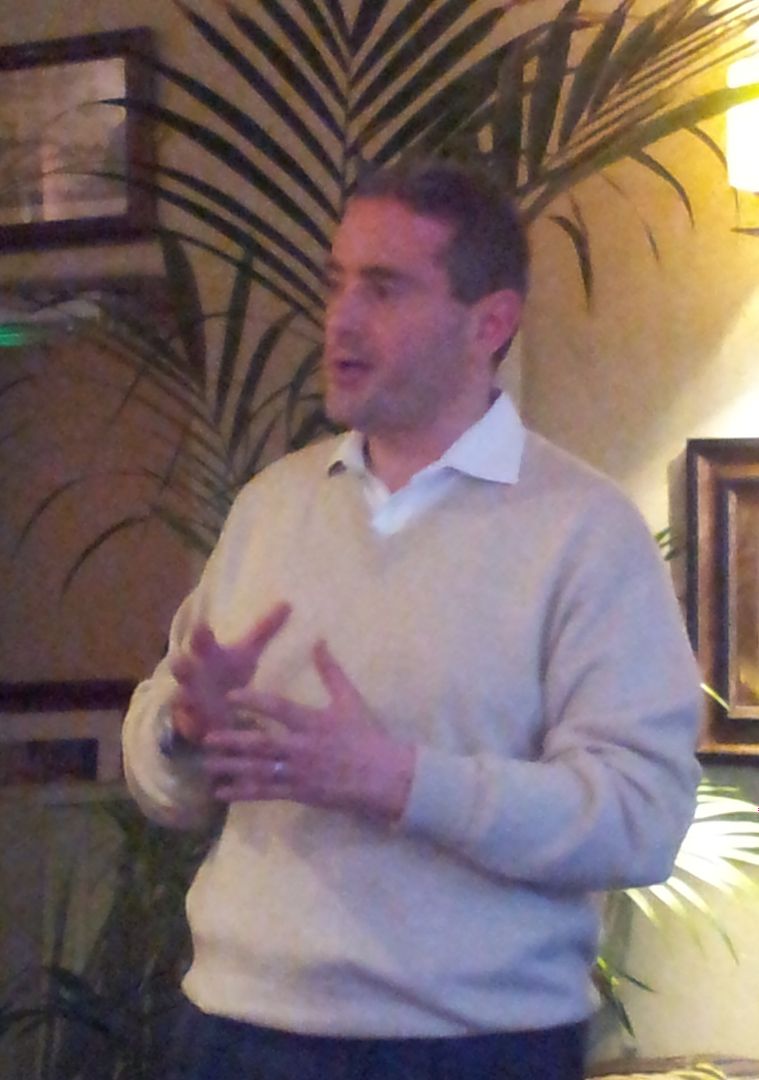
Ralph Hochar briefly introduced the wines
The first real course of the meal was a fascinating Chorba Mloukhiyeh - a chicken and Jew's mallow broth, with Goosnargh chicken, shallot vinegar, puffed wild rice and yet more flatbread, here crispy, which we were instructed to crumble into the soup. I really liked this, though it was a dish which needed to be eaten as a whole in big mouthfuls, allowing all the flavours and textures to meld together, rather than picking at individual elements. My first taste of the odd, almost okra like slimeyness of Jew's Mallow.
Chorba Mloukiyeh without the broth ...
... and with the broth
The Chorba Mloukiyeh was served with Chateau Musar, Musar Jeune Rouge 2010
A big blackberry-laden nose. There's powerful black fruit on the palate. Ultimately, it's a fairly simple wine, but gains some complexity from the drying tannins on the finish. 87/100
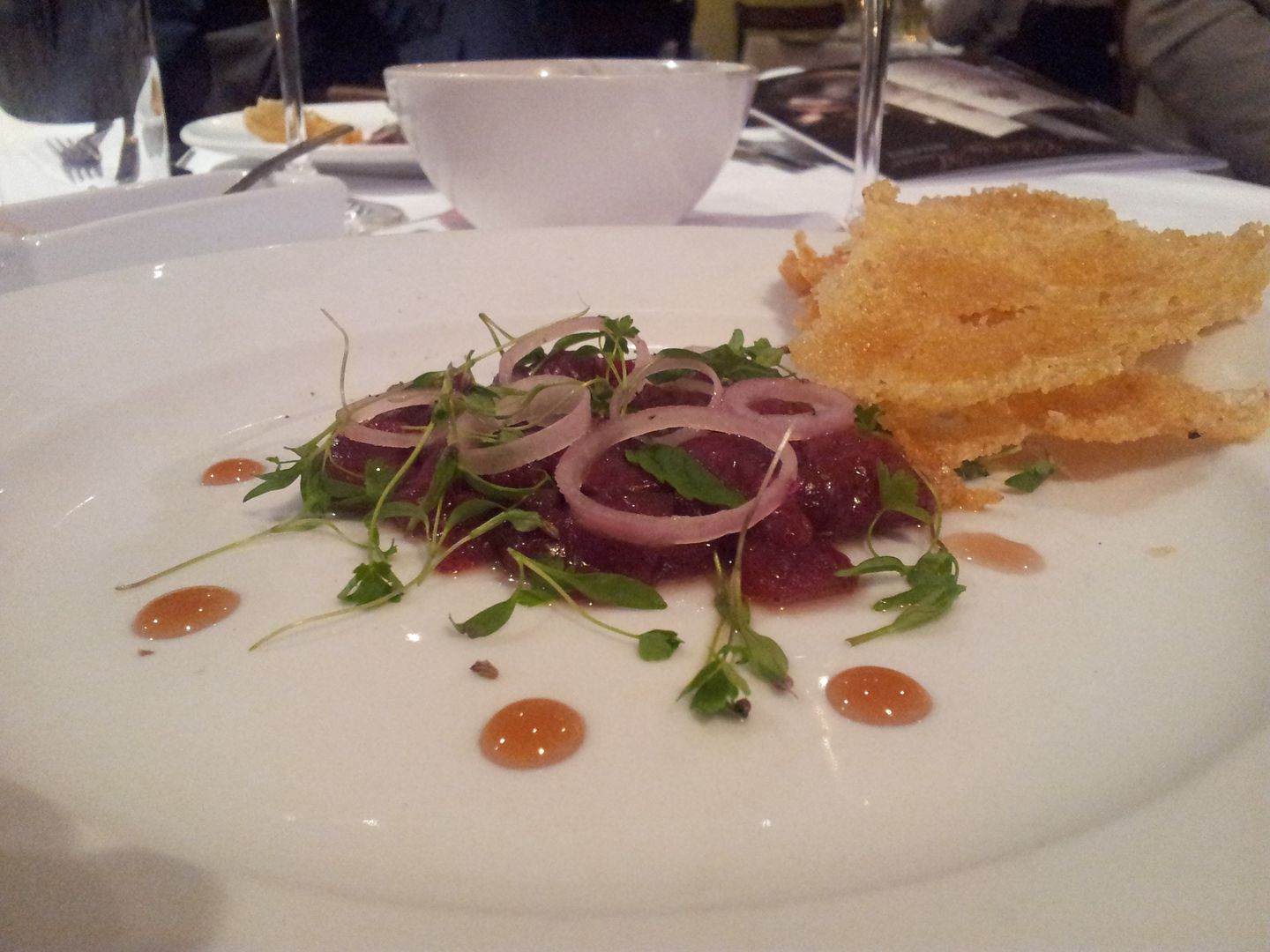
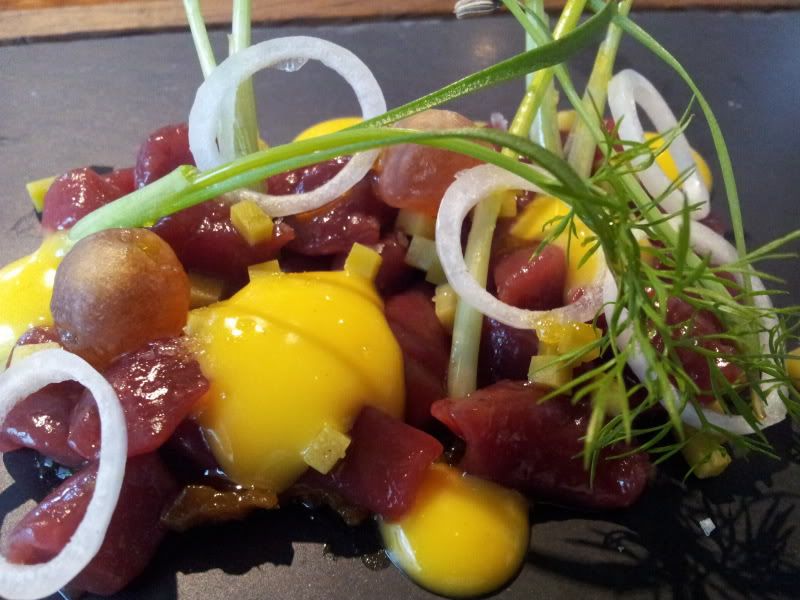
Kibbey Nayeh was probably the dish that had been most adapted to the Lancastrian palate, as rather than being made with pulverised raw lamb, this was a hand-chopped venison tartare. There was a superficial resemblance to Simon Rogan's venison tartare dish, but really it was only superficial. The Parkers Arms version had a superb, delicate middle-eastern spicing, counterpointed by the dots of pomegranate molasses, and the cracked wheat crisps added more of a crunch than Rogan's version has.
Kibbey Nayeh
Just for fun, here's Simon Rogan's venison tartare from a meal at L'Enclume in May 2013
I've thought about it several times, and while it's a little unfair to compare such different dishes, I find it really difficult to say which I prefer: both are excellent in their own ways.
The Chateau Musar, Hochar Père et Fils 2007 was served with the venison:
The Hochar Père et Fils is made only in a red version. It isn't a second wine of Musar as such, but rather is sourced from a single vineyard planted over 50 years ago near the village of Aana in the Bekaa Valley. The wine has a lovely, integrated nose with red and black fruits, and more than a touch of
cough medicine. Really good palate: it feels very integrated with some nice
spicy notes. Great length. 90/100
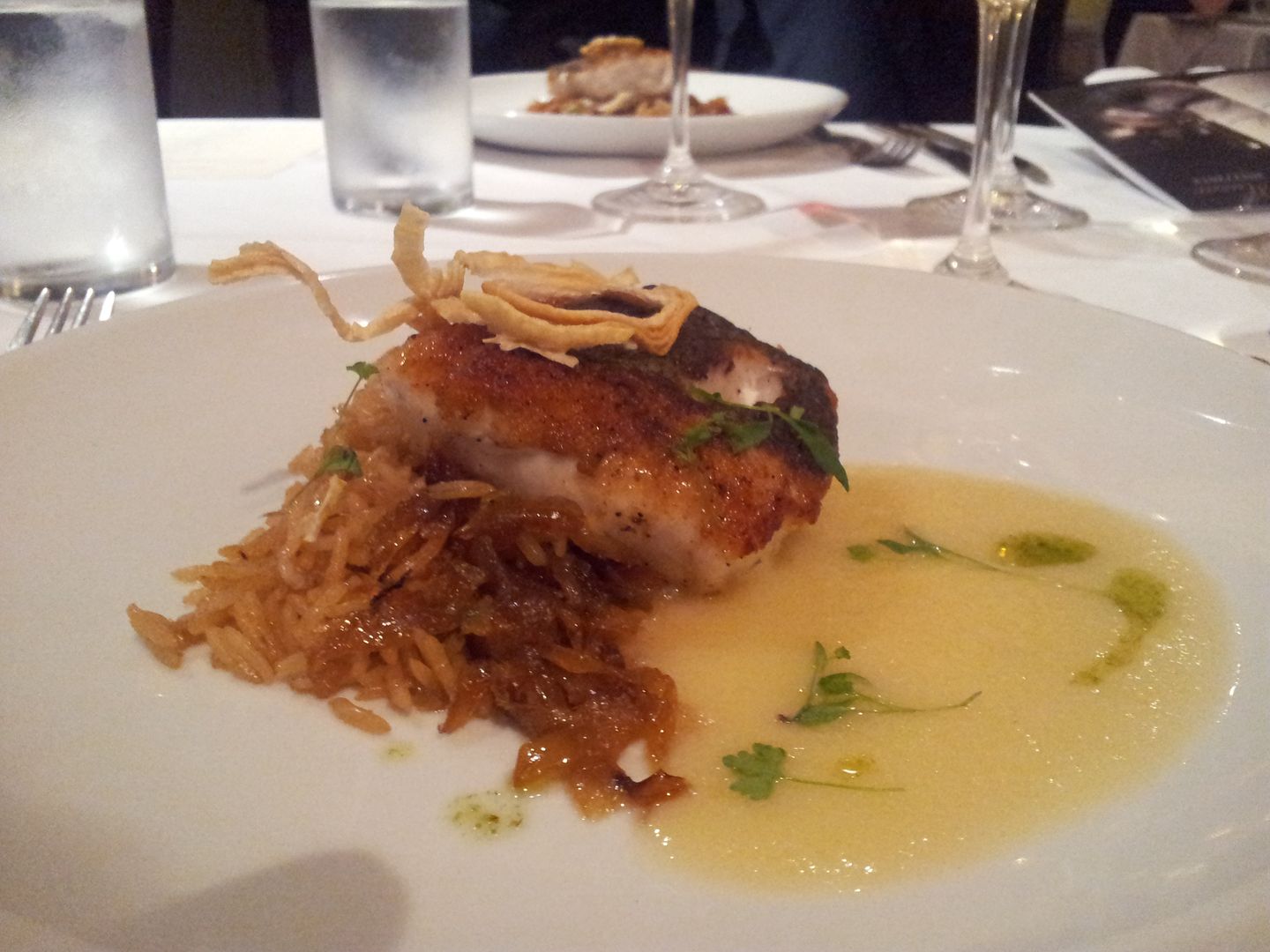
Our next course was eagerly anticipated by me, as I'd had the accompanying rice with fish at the Parkers Arms before: Siyadiyeh - roast, spiced hake served with a caramelised onion pilaf and a buttery lemon sauce. Nicely cooked fish (not always that easy when you're doing a banqueting style service), with the rice living up to expectations, and the sauce utterly delicious.
Siyadiyeh
The wine with the hake was a bit of a treat: the completely unique Chateau Musar white - not a terribly old version (it ages amazingly), but drinking very well and served, correctly, at room temperature.
Chateau Musar White 2005
This has a mushroomy, nutty nose with hints of lanolin ... and lots lots more.
Fascinating palate, almost defying description. It has a rich, velvety texture.
"Multi-layered" hardly suffices to describe its complexity. Really fascinating, gorgeous stuff.
Lots of umami. Remarkable. 93/100.
Lahem Meshwi came next: charcoal-grilled marinated lamb from the Cockerham salt marshes, served with aubergine confit and purée, grilled onion, confit garlic and a lemony lamb jus dressing. Beautiful lamb, terrific flavours.
Lahem Meshwi
Oh, and there is no way I could not give a special, separate mention to these amazingly good lamb-fat and za'atar roast potatoes. Wow.
With the lamb, we drank the last of the wines, the prime cuvée, the Chateau Musar Red: Chateau Musar Red 2005
The nose has some subtly perfumed red fruits with sous-bois notes, but also some horse
sweat notes. There is huge depth immediately on the palate. Musar usually only starts to show it's best after some years, but for such a young Musar, this has a really remarkably
classy feeling. It's very poised, elegant and rather feminine. There's a good tannic
structure to give some backbone, but the tannins are not at all aggressive. Is there such a thing as an early
drinking Musar? This could be it. 93/100
We then moved on to some generous pours of Musar's Arack. Chateau Musar L'Arack de Musar
A very good clean arack. Not much more you can say. Although we all try it neat, it's not something to drink neat: Ralph Hochar recommends one part arack to two parts water.
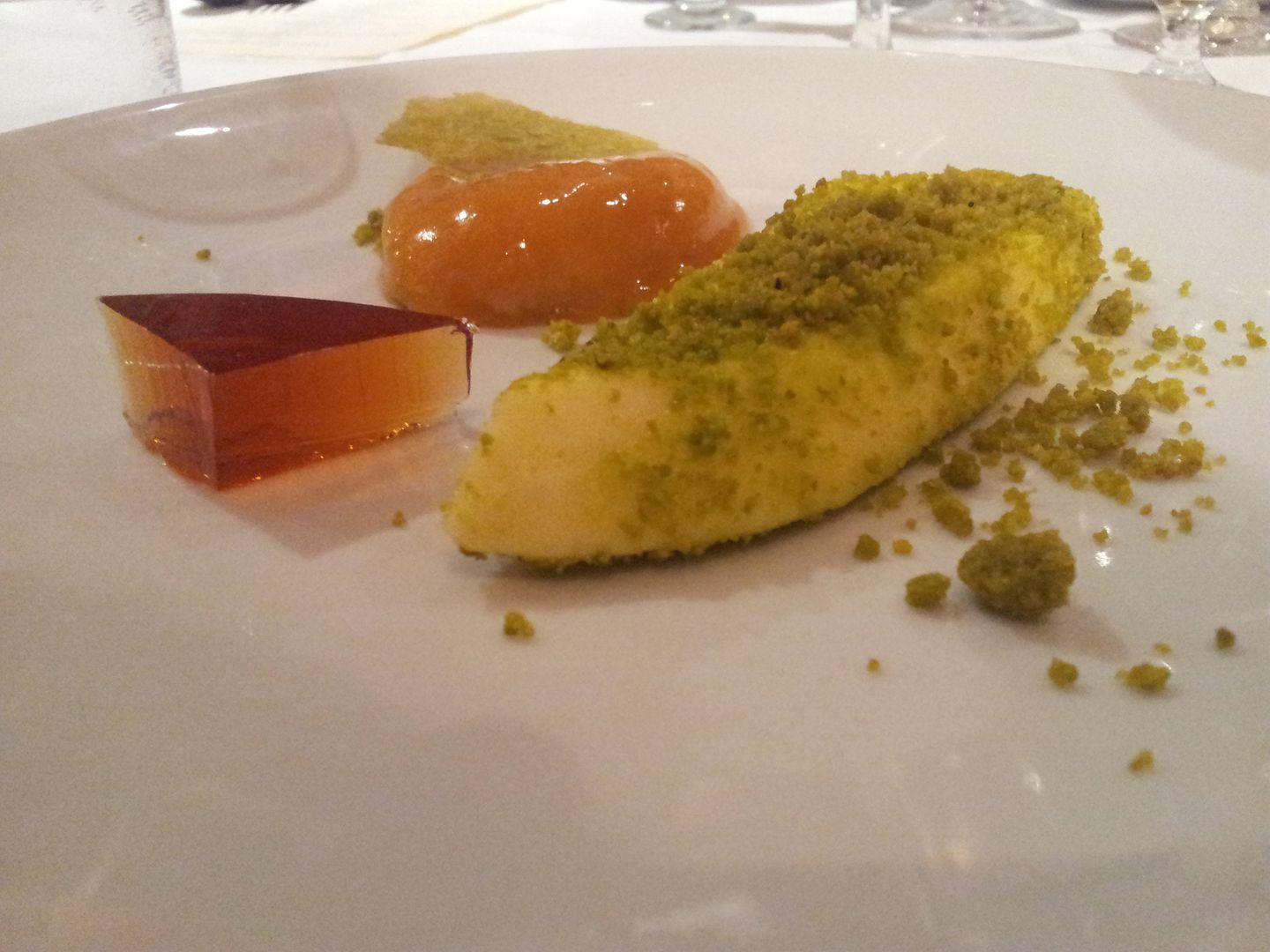
Arack (the aniseed spirit made and drunk across the Middle East, Turkey and Greece) would not have come immediately to mind as something to drink with a fresh curd cheese, but I thought it actually worked pretty well with the next dish. Gibneh Beida was Stosie's home-made soft, fresh curd cheese made with milk from Gisburn, rolled in a pistachio crust and served with a pistachio tuile, a bright, clear, rosehip jelly and an unctuous Amar el Din (i.e. apricot) sorbet.
Gibneh Beida
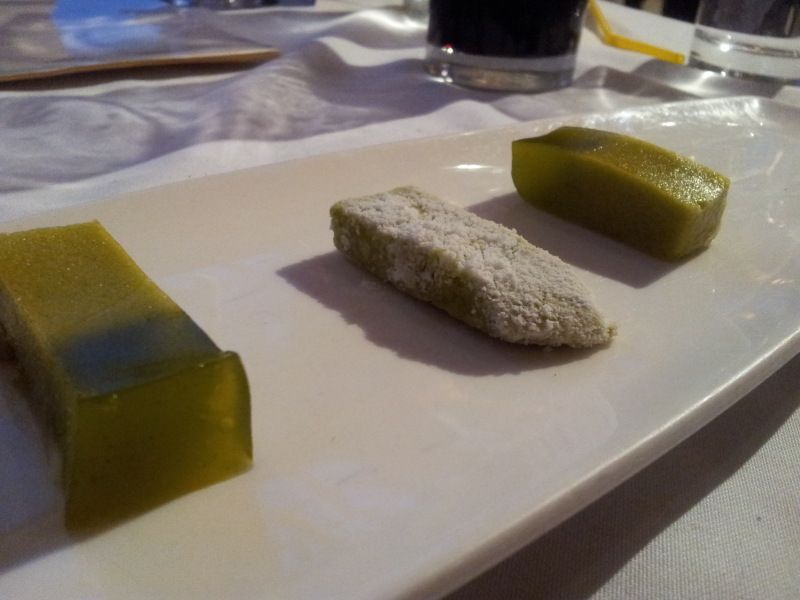
The Arack was much more of a natural partner for the final instalment of an excellent evening of food and drink: Qahwa, Halwa Makroun bil Loz & Namoura. Coffee subtly infused with cardamon, and served with two utterly delicious, incredibly moreish sweetmeats: some almond shortcakes and what the menu said was a semolina and elderflower syrup cake, but was actually two different syrup-laden cakes.
I hope it will be possible for the Parkers Arms and Chateau Musar to repeat this event next year, maybe, and also that it might mark the start of more wine evenings, allowing Stosie Madi to express further aspects of her heritage. Hmmm ... could lamproies à la Bordelaise be one step too far for the Ribble Valley?